401-298-8040[email protected]275 W Natick Road, Suite 800, Warwick RI
Why Solar?

Why Switch to Solar: Benefits for New England Homeowners

Here at Rooftop Power we strongly believe solar energy is the way of the future, and the numbers agree: over a million American households have made the switch. Here is the honest 2026 version of why, without the outdated pitch.

4.8
876 Google Reviews
3,027+
Solar Installs Completed
A+
BBB Accredited
RI, MA, CT
Licensed In All Three
CERTIFIED INSTALLER·5,065 TOTAL PROJECTS·$0-UPFRONT FINANCING·LICENSED RI ELEC AC004027 · RI GC 42278 · MA · CT

New England Rates Keep Climbing. Your Roof Is The Hedge.

Rhode Island Energy, Eversource, National Grid and United Illuminating customers have watched supply and delivery rates climb year after year. Every kilowatt hour your roof produces is one you do not buy at whatever the utility charges that season.

Solar flips the model. Instead of renting your power at a floating rate you do not control, you produce it at a cost that is set the day the system turns on. The utility rate can keep moving. Your solar cost does not.

Across the 25-plus year life of a quality system, that difference is the whole argument. A roof in Rhode Island, Massachusetts or Connecticut is not just shelter, it is the one place on your property that can turn sunlight into a fixed, predictable power cost for decades.
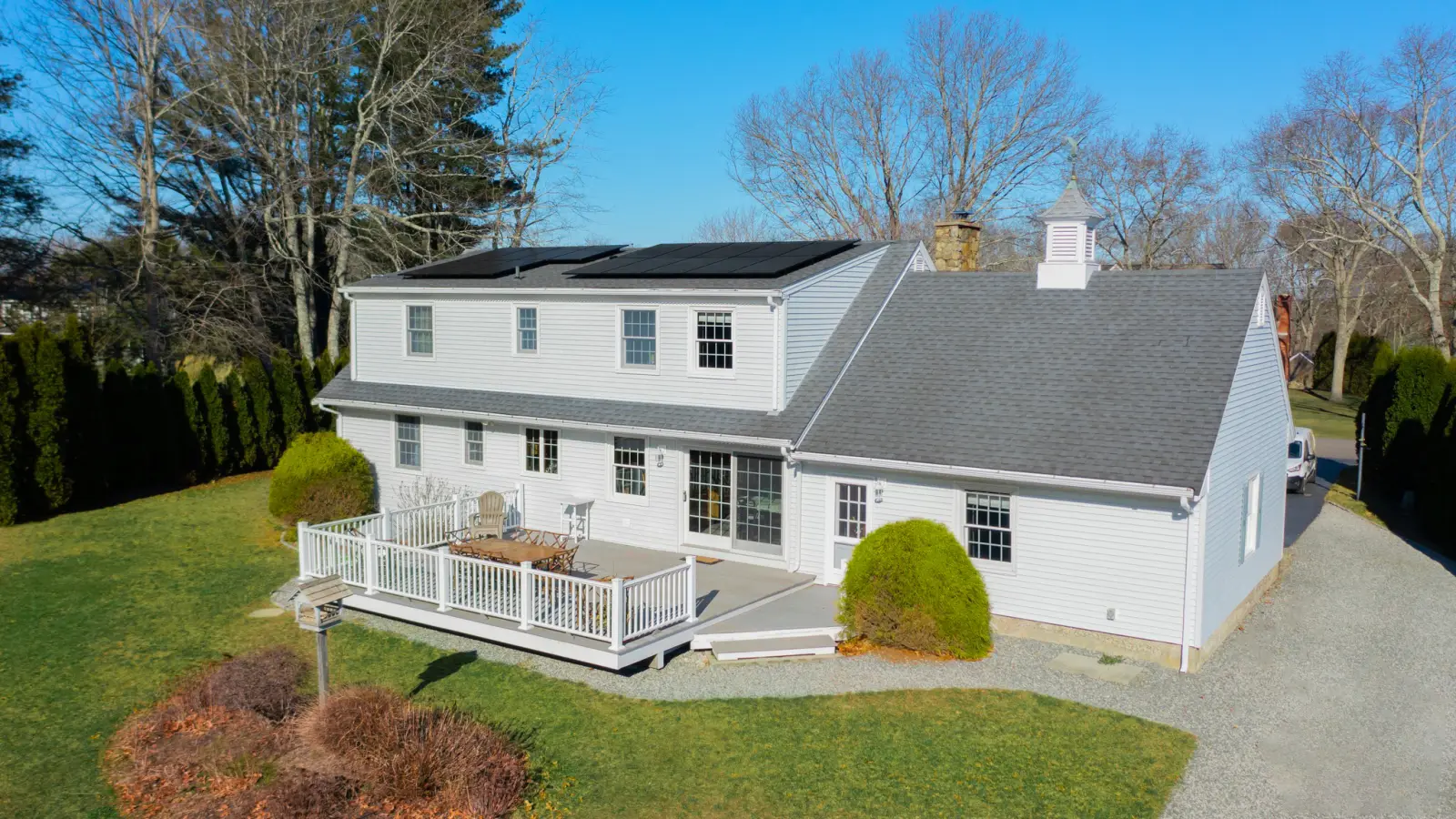
Rooftop Power solar panel installation on a West Warwick, Rhode Island home.

How Net Metering Pays You Back

In all three states we serve, net metering credits you for the surplus power your system sends to the grid. A well-designed system produces more than you use on long summer days and less than you use in winter. Net metering is the bridge between the two.

Your summer overproduction banks credits that offset the power you draw at night and through the winter. It is the mechanism that lets a correctly sized system cover so much of an annual bill, even though the sun is not shining every hour you need electricity.

The rules differ by state and utility, so we design around your actual usage, not a brochure average. If we cannot make the annual math work for your roof, we tell you before you sign, not after. Read our plain-English explainer on net metering in Rhode Island for the details.

The Honest Word on Incentives in 2026

Be careful with any company still leading its pitch with the old 30 percent federal tax credit, which ended for residential systems placed in service after 2025. Companies still advertising it as a current benefit are selling the past.

The good news is that the New England math never depended on the federal credit alone. State-level programs are alive and doing the heavy lifting. Eligibility depends on your home, your utility and current program rules, so we confirm exactly what you qualify for and put it in writing before anything is signed.

  • Net metering: Rhode Island, Massachusetts and Connecticut
  • Rhode Island: Renewable Energy Growth performance tariff or the Renewable Energy Fund grant
  • Massachusetts: the SMART program
  • Connecticut: the Renewable Energy Solutions program
  • Programs change often. We verify current eligibility for your exact address before you sign anything.

The Four Ways to Pay, Explained Plainly

There is no single right way to go solar, only the one that fits your situation. Rooftop Power offers four, and three of them start with no money down. We walk through all of them with your real numbers so you can pick with open eyes.

A solar loan lets you own the system and its production while spreading the cost over time. Paying cash owns it outright for the strongest long-term position. A power purchase agreement, or PPA, means you pay only for the power the panels produce at a set rate. A lease is a fixed monthly payment for the equipment. We show you what each option costs side by side, in writing, and we never push the one that pays us the most.
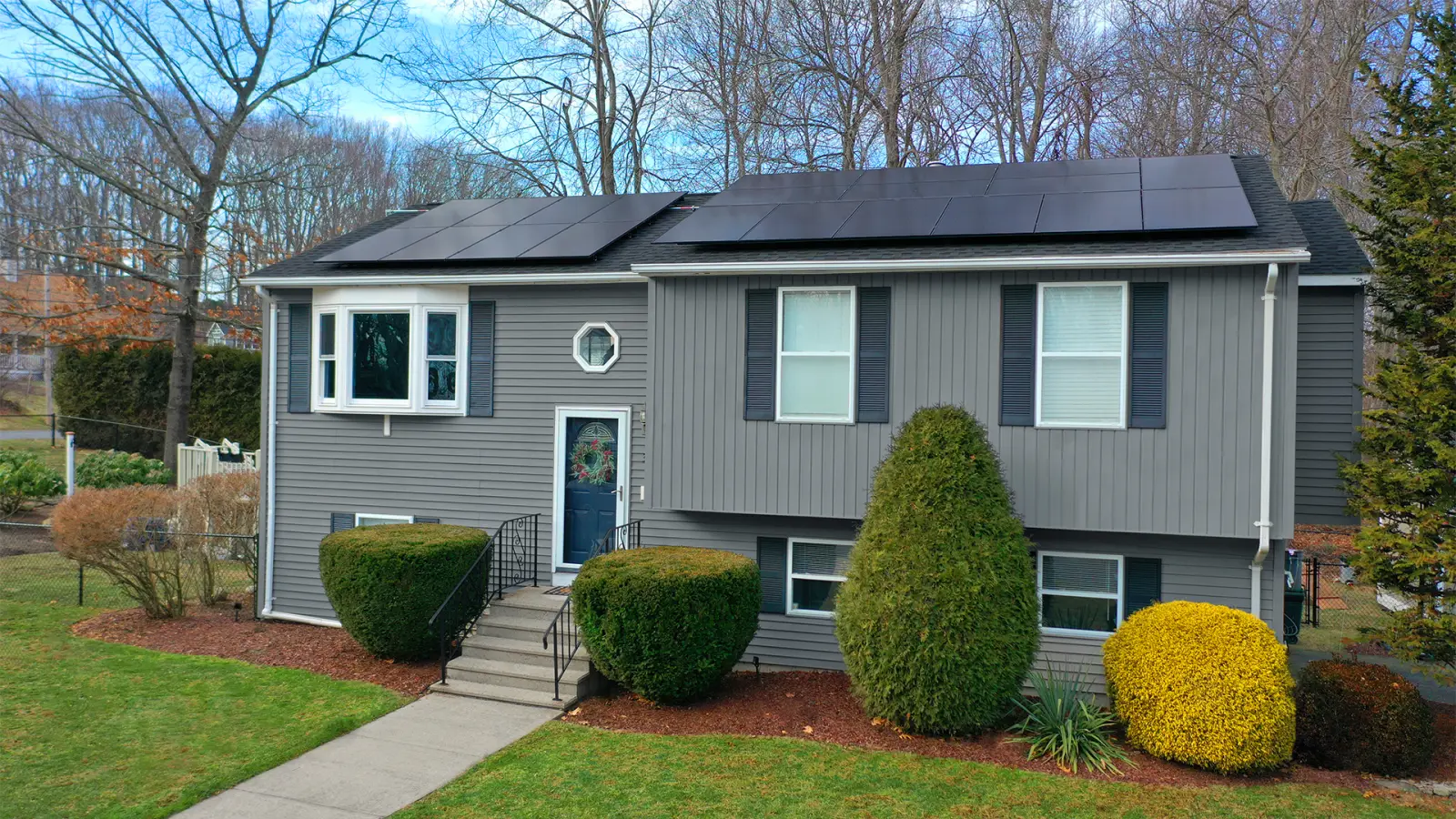
Rooftop Power solar panel installation on a Norton, Massachusetts home with tree cover

The Rest of the Case for Solar

Beyond the bill math, four more reasons homeowners across New England make the switch:

Energy Independence

Produce your own power and lean on the grid less. Pair the system with a battery and your essentials keep running through outages.

Learn More

Increased Home Value

Studies consistently show buyers pay a premium for homes with solar. A locked-in power cost is a feature people pay for.

Environmental Impact

A typical home system offsets tons of carbon every year. Real, measurable impact from your own roof.

Better Technology Than Ever

Panels are more efficient, warranties longer and monitoring smarter than they have ever been. This is not the solar of 2010.

Learn More

One Roof, One Crew: Solar and Roofing Together

A solar array should sit on a roof with real life left in it. Panels last 25 years or more, so putting them on a roof near the end of its life means paying to remove and reinstall them later. That is a cost and a headache we would rather you avoid.

Rooftop Power is a roofing company as much as a solar company, with our own in-house crews for both. When a roof needs work, we handle the replacement and the solar install as one project, on one timeline, under one warranty. No coordinating two contractors, no finger-pointing when something needs attention. It is one of the biggest reasons homeowners choose a local installer that owns the whole job.
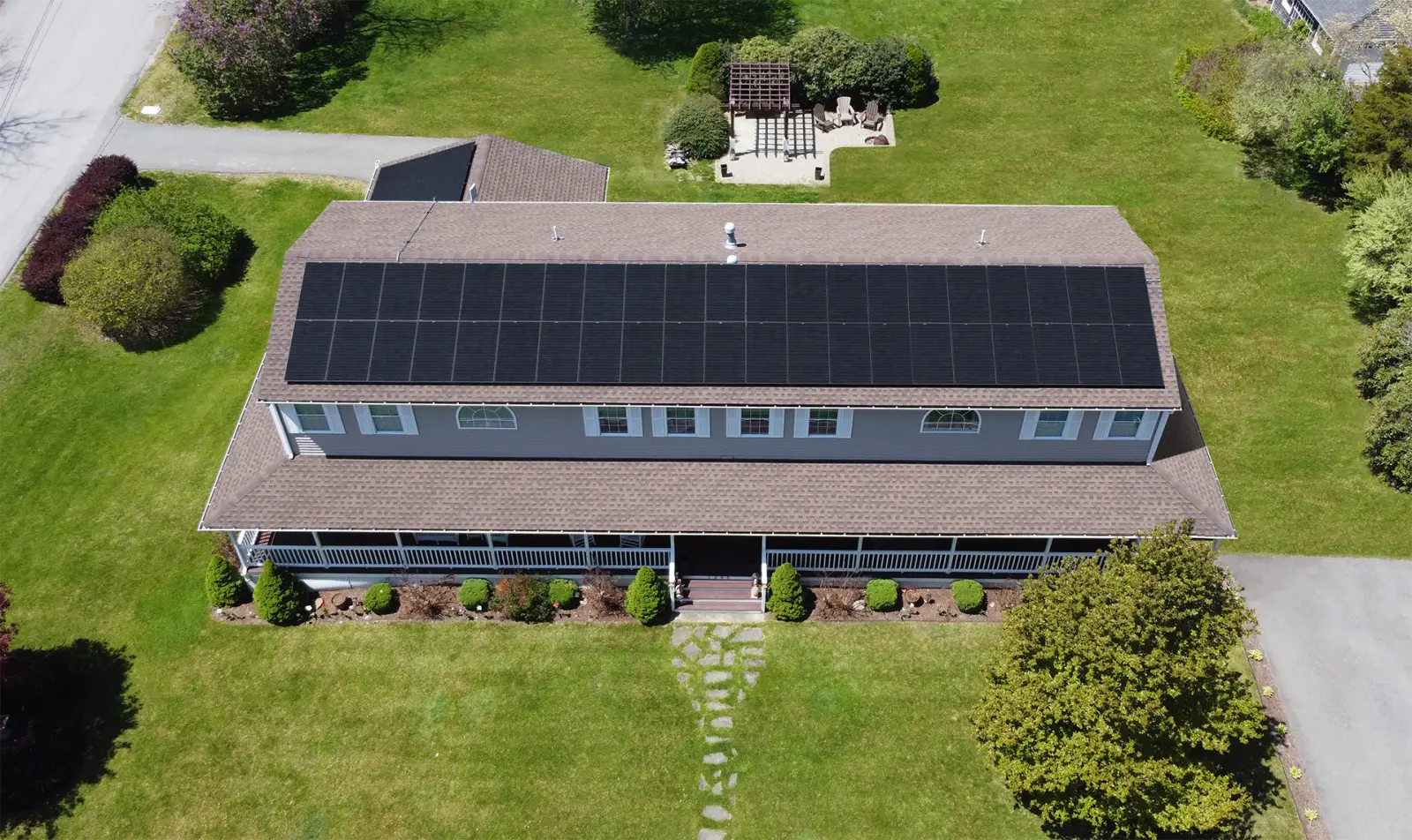
Aerial view of a home with solar panels illustrating Connecticut RES program options.

Is Solar Right For Your House?

Not always, and we will tell you when it is not. Roof age, orientation, shading and your actual usage all matter, and a company that says yes to every roof is not being straight with you.

That is why every project starts with a free assessment: your recent bills, your roof and a straight answer. We model your production across a full year on your actual roof, not a regional average.

If the numbers work, you will see exactly how much of your bill the system covers and what each payment option costs. If they do not, you will hear that too, with no hard sell to follow.
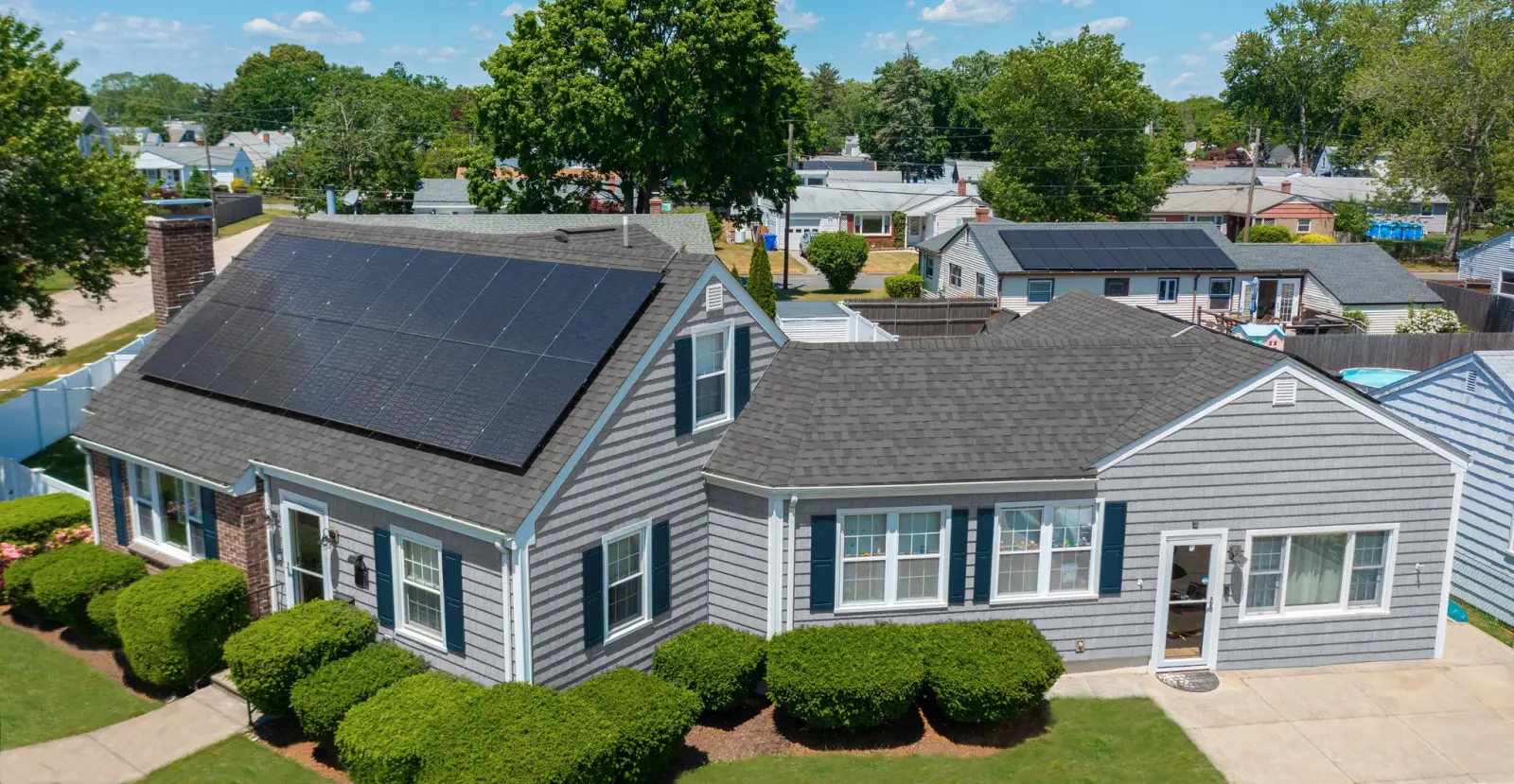
Rooftop solar panels on a West Warwick, Rhode Island home, Rooftop Power installation.
FAQ

Frequently Asked Questions

Is the 30 percent federal solar tax credit still available?
No. The federal residential solar tax credit ended for systems placed in service after 2025. Be cautious with any company still advertising it as a current benefit. State programs like net metering, Rhode Island’s Renewable Energy Growth and Renewable Energy Fund, Massachusetts’ SMART and Connecticut’s Renewable Energy Solutions remain active, and we confirm your current eligibility before you sign.
Do solar panels work in New England winters?
Yes. Modern monocrystalline panels produce year round, and net metering banks your summer surplus to offset shorter winter days. We size systems around your full-year usage, not a single sunny month. Snow typically slides off the smooth panel surface, and short winter days are already accounted for in your design.
How much can I save with solar?
It depends on your usage, your roof and your payment option, which is why we do not quote guaranteed dollar figures. What we do is put your system’s production estimate next to your actual bill, line by line, in writing, so you can see the real math for your home before you commit.
What are my options to pay for solar?
Four: a loan, cash, a power purchase agreement (PPA), or a lease. Three of the four start with no money down. A loan and cash mean you own the system and its production. A PPA means you pay only for the power produced, and a lease is a fixed monthly equipment payment. We show all four side by side with your numbers.
Do you use subcontractors?
No. Our electricians, roofers and solar installers are Rooftop Power employees. The company that designs your system is the same company that installs it and services it afterward. That is why so many of our reviews name the crew.
What if my roof needs to be replaced first?
We handle it. Rooftop Power is a roofing company as well as a solar company, so if your roof is near the end of its life we replace it and install solar as one project, on one timeline, under one warranty, instead of paying to pull panels off later.
What panels and warranties come with a Rooftop Power system?
We install tier-1 monocrystalline panels matched to your roof and electrical needs. Your panels, inverter and any battery each carry their own manufacturer warranties, typically 10 to 25 years by component, and we back our own installation workmanship separately. You get the full documentation, not just a verbal description.
What happens during a power outage?
Solar alone shuts off during an outage for line worker safety, so panels by themselves do not power the house when the grid is down. Pair the system with a battery and your essential circuits keep running. We will tell you honestly whether a battery makes sense for your home.
Can I add a battery or EV charger later?
Yes. Many homeowners start with solar and add battery storage, an EV charger or a standby generator later. We can design the system with future add-ons in mind so the additions are clean when you are ready.
Does solar really add value when I sell my home?
Generally yes. An owned system tends to add value and transfers with the house. If you financed or have a PPA or lease, the agreement is transferable to the buyer or can be settled at sale. We make sure you understand exactly what you are signing so there are no surprises later.
How does the process work, from first call to switched on?
It starts with a free assessment of your bills and roof. If the numbers work, we design the system, handle the permit and the utility interconnection, install with our own crews, usually in one to three days, and stay with you through activation. Most projects run a couple of months from signing to a system that is switched on.

See The Real Math For Your Home

Free assessment, no pressure. Your bills, your roof, and honest numbers in writing.

BBB A+ AccreditedLicensed in RI, MA and CTWe Are The Renewable Generation.