
A home battery stores solar power and runs essential loads when the grid goes down. Grid-tied solar panels alone shut off during an outage, so a house with solar and no battery goes dark. Rooftop Power installs batteries with its own crews across Rhode Island, Massachusetts and Connecticut, and can add storage to many existing solar systems.
Solar makes your power cheaper. A battery makes it yours. Rooftop Power designs and installs home battery storage across Rhode Island, Massachusetts and Connecticut, sized around what your household actually needs to keep running when a storm takes the grid down.
Updated October 2026
A home battery like the Tesla Powerwall 3 does three jobs at once. First, backup: when the grid goes down, your essential circuits keep running automatically, switching over in a fraction of a second so fast that clocks do not blink and a Zoom call barely hiccups. Second, storage: instead of exporting your midday solar surplus, you bank it in the battery and pull from your own power after the sun sets. Third, control: through the app you decide which loads matter, from the refrigerator and heat to the well pump, the sump pump and the medical equipment that cannot lose power.
There is a difference between a battery and a generator that most homeowners do not learn until the lights are already out. A generator roars to life after a delay and burns fuel the whole time it runs. A battery is silent, instant and already charged, and if you have solar it refills itself for free the next day. For the outages New England actually sees, most of them measured in hours, that combination is exactly what you want.
One honest note most installers skip: solar panels alone shut off during an outage. Utility rules require it so that no power flows onto the lines while a line worker is making repairs. That means a house with solar and no battery goes just as dark as the house next door. If keeping the power on is the reason you are calling, the battery is the piece that delivers it, and we will say so plainly.
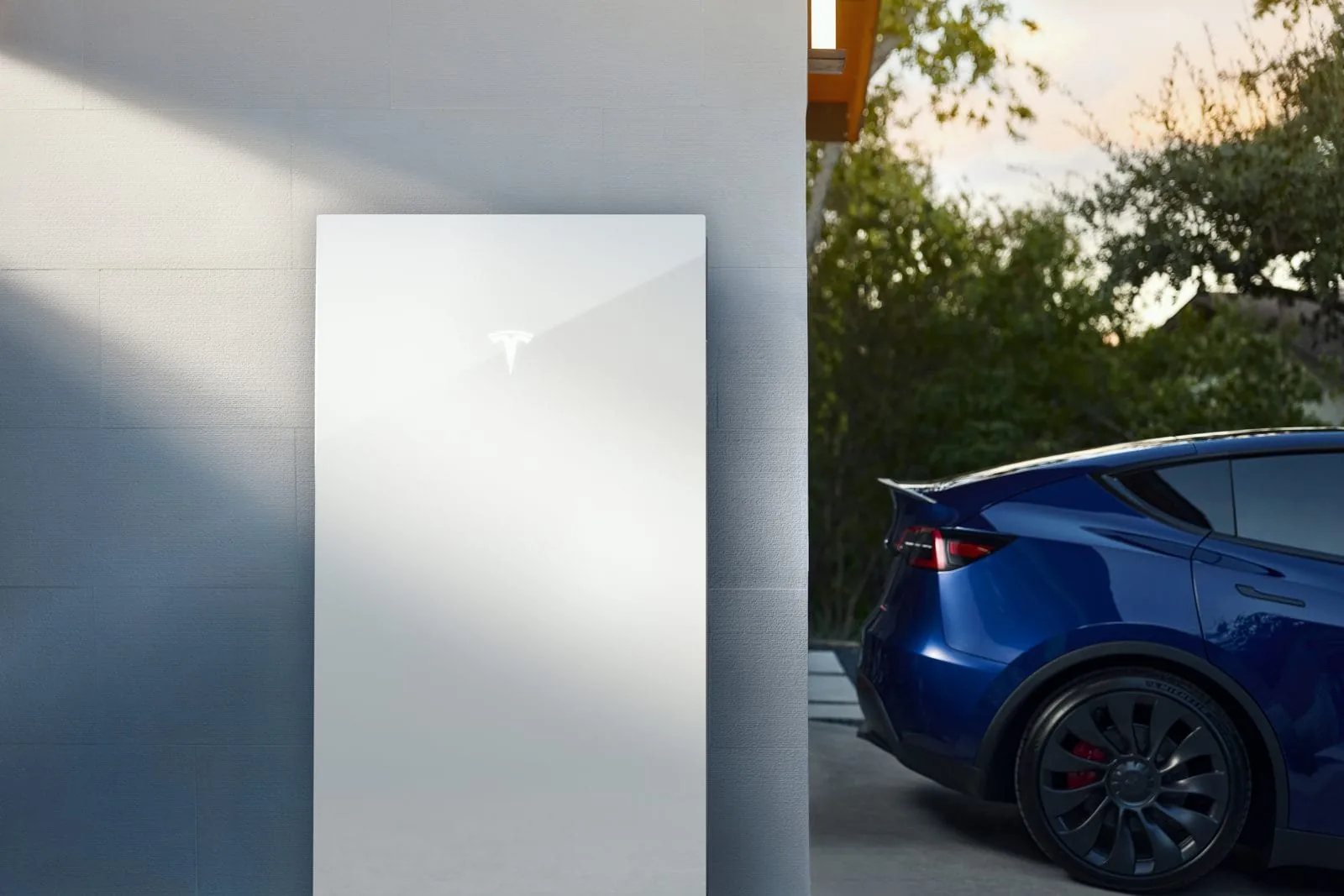
These two do different jobs, and the right question is not which one wins but which one fits how your grid behaves. A battery is the better answer for the common case: the storm that knocks power out for a few hours to a day, plus everyday use, since a battery also lets you store cheap or self-produced power and lean on the grid less. It is silent, needs no fuel deliveries, requires almost no maintenance and switches over the instant the grid drops.
A standby generator is built for the rare long haul. When a nor’easter or an ice storm takes the lines down for three, four or five days, a generator can run as long as it has fuel, which is something no battery can match on its own. The tradeoff is noise, fuel, routine servicing and a startup delay every time it kicks on.
For a lot of New England homes the strongest setup pairs the two. The battery handles the instant switchover and the daily cycling so your lights never flicker, and the generator stands behind it for the multi-day events. You get seamless everyday backup and a fuel-fed backstop for the worst week of the year. We will lay out battery-only, generator-only and the paired design with real numbers so you can see the tradeoffs before you decide.
Solar and storage are better together than either is alone. During the day your panels cover the house and send the extra to the battery. When the sun goes down, you run on that stored power instead of buying it back from the utility at the evening rate. In an outage, the panels keep the battery topped up by day so your backup can stretch across events that would drain a battery running on its own.
Net metering still matters even with a battery. In all three states we serve, the utility credits you for surplus solar you export to the grid, and those credits offset the power you draw at other times. A battery changes the mix by letting you self-consume more of your own production instead of exporting it, which is valuable when the price you pay for grid power is higher than the credit you earn for sending it back. We design the split around your utility’s actual rules, whether that is Rhode Island Energy, Eversource, National Grid or United Illuminating. For Massachusetts supply prices, see Massachusetts electric rates in 2026.
If you already have solar, you do not have to start over. We retrofit storage onto most existing systems, matching the battery to your inverter and panel setup. If you are installing solar and a battery together, we design them as one system from the start so the wiring, the backup panel and the monitoring all work as a single unit.
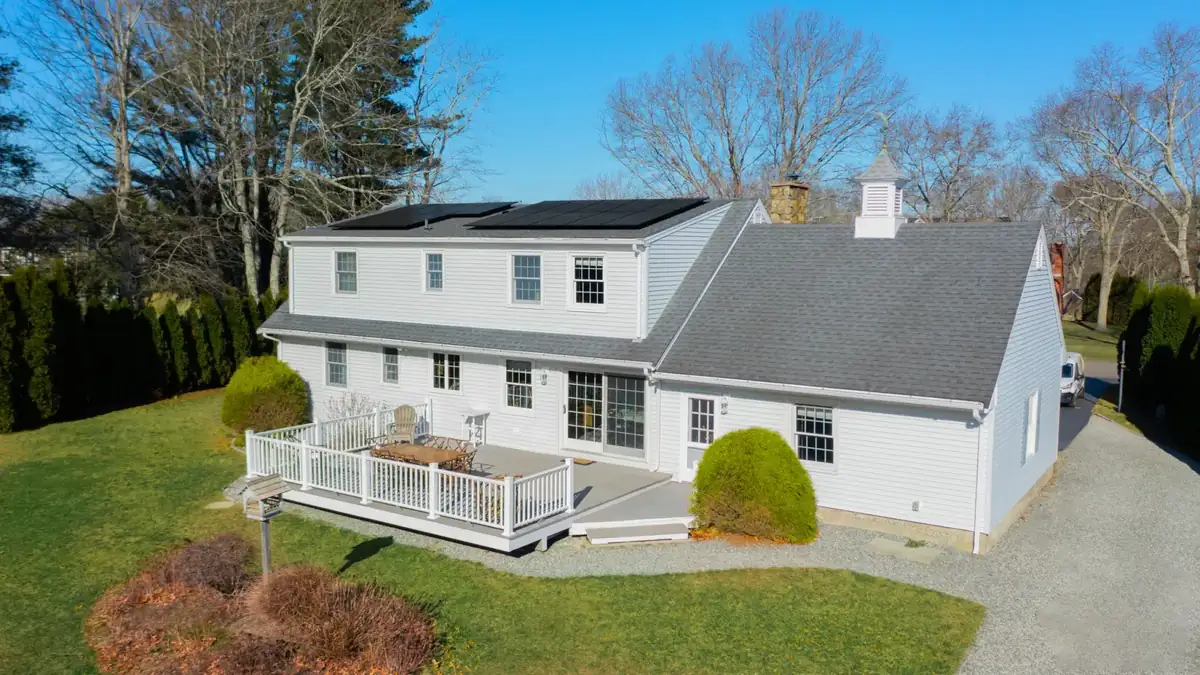
A battery that is too small strands you mid-outage. One that is too big is money spent on capacity you never use. The design starts with a simple question: what has to stay on, and for how long? For most homes the smart answer is an essential-loads design that carries refrigeration, heat, water, lighting, internet and phone charging, the things that turn a multi-day outage from a crisis into an inconvenience.
Whole-home backup is possible and some households want it, especially homes with well and septic pumps, electric heat or a family member who depends on powered medical equipment. It takes more battery capacity, and often more than one unit, so we walk through what that costs against an essential-loads plan and let you choose with the numbers in front of you.
Geography changes the math too. A coastal home in Westerly or Riverside that sees longer, more frequent storm outages gets a different design than a Providence three-decker that rarely loses power for more than an hour. We size around your actual loads, your outage history and how much your solar can recharge each day, not a one-size number off a brochure.
Our outages have a pattern. Most are short, a downed limb or a blown transformer that the utility clears in a few hours. A handful each year are the serious ones, when a nor’easter, an ice storm or a hurricane remnant takes whole neighborhoods dark for days. A well-designed battery is built around that reality: enough capacity to ride out the common outage comfortably, and with solar recharging by day, enough to keep essentials alive through the longer ones.
The switchover is what makes a battery feel different from a generator. When the grid drops, the transfer happens automatically in milliseconds. You do not flip a switch, prime an engine or wait in the dark. In many homes the only sign the grid went down is the notification on your phone, because the lights, the heat and the fridge never paused.
Winter is exactly when this earns its place. Cold snaps drive up demand and strain the grid at the same time storms are most likely, and a house without heat in a New England January is not a small problem. A battery keeps the furnace fan, the boiler controls and the pumps running so your heating system does not go cold while you wait for the crew to reach your street.
Be careful with any company still building its pitch on the 30 percent federal tax credit, which ended for residential systems placed in service after 2025. Companies advertising it as a current benefit are selling the past. We do not quote guaranteed dollar savings either, because your numbers depend on your usage, your rate and your design. What we do is put the real figures in writing before you sign.
The state-level picture is where the active programs live. Net metering runs in Rhode Island, Massachusetts and Connecticut. Rhode Island offers the Renewable Energy Growth performance tariff and the Renewable Energy Fund grant. Massachusetts runs the SMART program, which includes an added incentive for pairing storage with solar. Connecticut runs the Renewable Energy Solutions program. Eligibility depends on your home, your utility and current program rules, and those rules change often, so we confirm exactly what you qualify for and put it on paper before anything is signed.
The honest way to think about a battery is as resilience plus everyday value. It keeps your home running when the grid fails, and between outages it lets you store your own solar and lean less on utility power. We show you what the storage adds to a project and what it does for your bill and your backup, side by side, so the decision is yours with clear eyes.
A battery install is serious electrical work. It involves load calculations, panel and subpanel work, transfer equipment, and permits and inspections in every town we serve. Ours are done by Rooftop Power’s own licensed electricians in Rhode Island, Massachusetts and Connecticut, permitted and inspected properly, never handed to a subcontractor. The company that designs your system is the same company that installs it and stands behind it.
When the battery is energized we set up the monitoring so you can see it work. The app shows your solar production, your battery charge and the exact circuits it is protecting, and it alerts you when the grid goes down and when it comes back. You are not guessing whether your backup is ready. You can look and know.
Warranties are handed to you in full at activation. Manufacturer battery warranties typically run ten years, tied to cycles or energy throughput, and our own workmanship warranty covers the installation itself. You get the documentation in writing, not a verbal promise, so you know exactly what is covered and for how long.

Storage is one piece of a resilient, lower-cost home. Here is how it connects to the rest of what we do:
A battery earns the most when it is charging from your own roof instead of the grid. Solar plus storage is the complete package.
Learn MoreFor the rare multi-day outage, a generator behind your battery carries the load as long as it has fuel.
Learn MoreAlready have solar? We retrofit storage onto most systems, even ones we did not install.
Learn MoreThinking specifically about a Powerwall? See the 2026 price ranges, the specs, how many you need, and the Massachusetts battery program.
Learn MoreWorking with Rooftop Power has been exceptional. From the beginning everyone at RTP kept me informed at every step. When a hiccup happened it was addressed immediately and resolved.
The installation crew was punctual, respectful, and left the job site spotless. I was particularly impressed with their attention to detail from the first consult to the final inspection.
Had a great solar experience with Rooftop Power from start to finish. We ended up getting a new roof and electrical upgrade for the install and used RP for both.
A free assessment of your loads, your solar and the right storage design, in writing.