
Electricity is one of the few line items on your income statement you can actually fix in place. Rooftop Power designs and installs commercial solar for businesses, farms and property owners across Rhode Island, Massachusetts and Connecticut, with the same in-house crews and honest math we bring to 4,000+ projects.
For a commercial building, power is not a background expense. Between supply charges, delivery charges and demand charges, electricity is often one of the largest controllable costs you carry, and in New England the rate you pay keeps moving in one direction. Rhode Island Energy, Eversource, National Grid and United Illuminating all price power at rates you do not set and cannot lock.
Solar changes that relationship. A commercial array produces power on your own roof or land at a cost that is fixed the day it is commissioned. Instead of buying every kilowatt hour at whatever the utility charges that season, you generate a large share of your own load at a predictable operating cost you can actually model into next year’s budget.
For businesses that run heavy daytime loads, refrigeration, manufacturing, warehousing, offices, farms, the fit is especially strong. Your peak production lines up with your peak usage, which is exactly when grid power is most expensive. That alignment is what turns a roof full of unused space into a working asset instead of a fixed liability.
It is also a visible commitment. Customers, tenants and employees increasingly notice which companies produce their own clean power, and an array on the roof is a statement you make every day without saying a word.
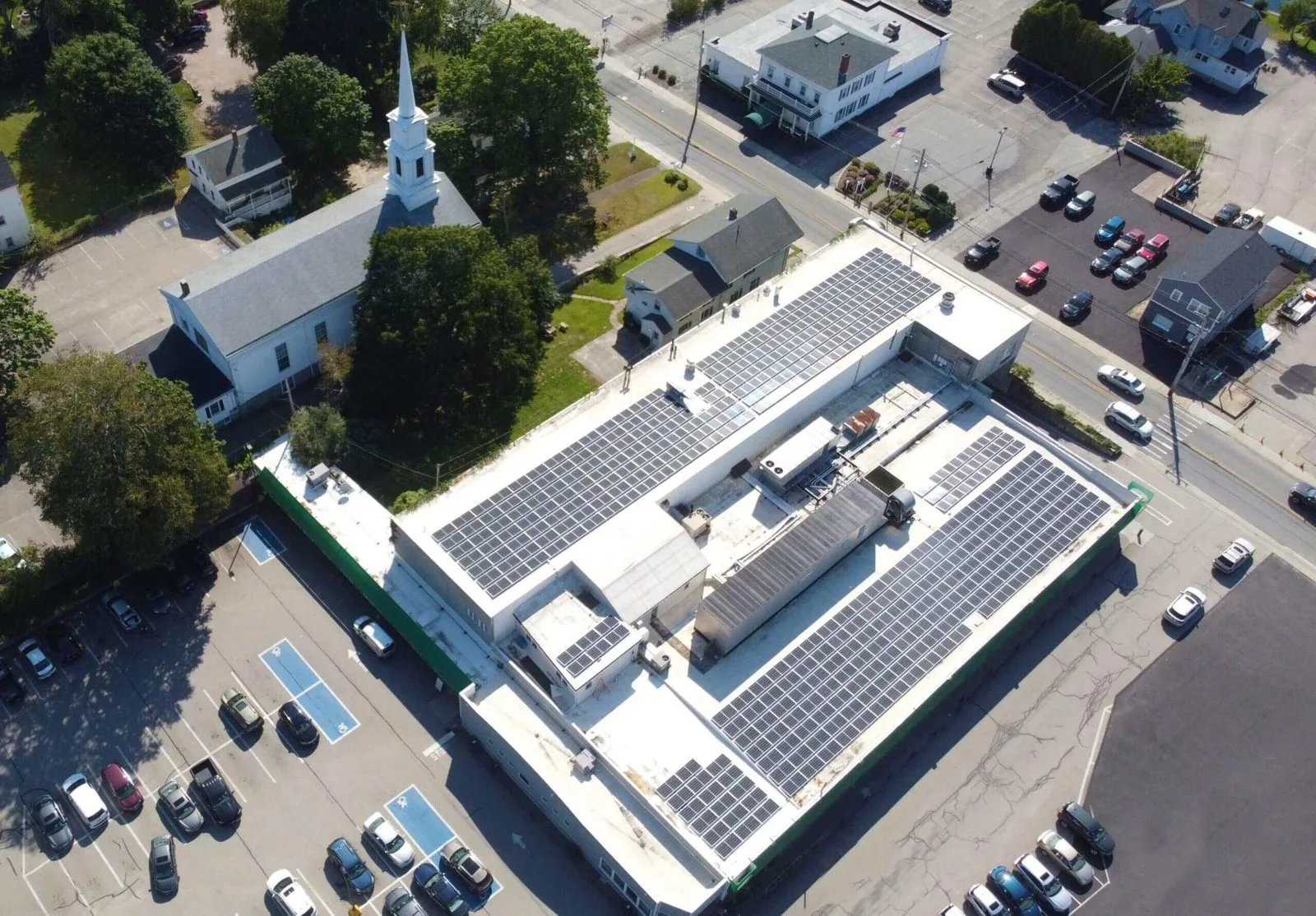
Commercial design starts with your interval usage and your rate schedule, not a template. We pull your last twelve months of bills and, where available, your interval data, so the system is sized against the load you actually run hour by hour rather than a rough annual average.
Every building is different, so every array is engineered to the structure you have. Flat membrane roofs take ballasted, non-penetrating racking that spreads the load and protects the roof. Standing seam metal takes clamped mounts that never breach the panel. Ground mounts and solar carports put unused land or parking to work when the roof cannot carry the whole system.
We model production against your operating hours so the array offsets the power you buy at your most expensive times, then hand you the full engineering and financial picture, structural review, stamped drawings, production estimate and installed cost, in writing before you commit any capital.
If the numbers do not work for your building, we tell you that before you sign, not after. A company that says every roof is a great fit is not being straight with you.
State programs and net metering do real work on a commercial project’s return, and the rules differ sharply by state, utility and system size. We confirm current eligibility for your specific property and put every assumption into the model where you can see it, rather than quoting a headline number and hoping it holds.
In Rhode Island, the Renewable Energy Growth program offers a performance tariff for commercial systems, paying a set rate for the power your array produces, and net metering credits surplus generation against your bill. Massachusetts businesses tap the SMART program, a per kilowatt hour incentive whose rates the state sets each program year by system size and utility territory. In Connecticut, the Renewable Energy Solutions program plus net metering shape the commercial return. We track which door your project fits and file the paperwork for you.
Business tax treatment, including depreciation and any federal credit your entity may qualify for, varies with your situation and your timing, so we coordinate with your accountant instead of making tax promises we are not qualified to keep. One thing worth knowing before you compare quotes: commercial solar is not governed by the residential rules. The residential credit ended for systems placed in service after 2025. The commercial credit did not, and under current law it remains available for projects placed in service by December 31, 2027. What your business would actually qualify for is a question for your accountant, and we put every incentive assumption in the model in writing so they have real numbers to work from.
What we commit to in writing is the part we control: the engineering, the production model and the installed cost. The incentive assumptions sit right next to them in the same document so nothing is hidden in a footnote.
There is more than one way to put solar on a commercial building, and the right one depends on your balance sheet and your goals. Owning the system outright, with cash or a commercial loan, gives you the strongest long-term position and full claim to every incentive and every kilowatt hour it produces.
A power purchase agreement, or PPA, lets a third party own the array while your business simply buys the power it produces at a set rate, often below your current utility price, with little or no upfront capital. For businesses that would rather preserve capital for operations, it turns a capital project into a predictable operating line item.
We walk through the options with your actual numbers side by side, ownership versus PPA, so you can weigh upfront cost, cash flow and long-term value with open eyes. We never steer you toward the structure that pays us the most.
Whichever path fits, the goal is the same: replace an unpredictable, rising utility bill with a fixed, predictable power cost you can plan a business around.
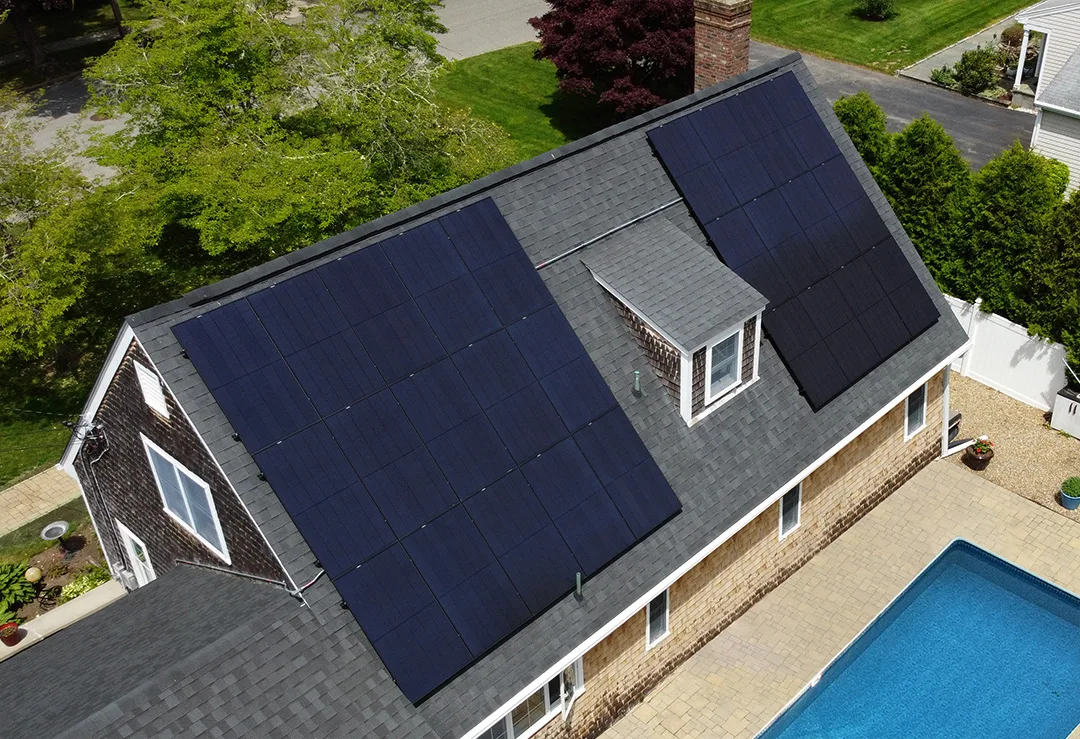
The same reasons homeowners do, at commercial scale: one accountable team, real licenses and a track record you can verify.
We are a roofing company as well as a solar company, so we can reroof or repair before the array goes up, all under one warranty.
Learn MoreLive production monitoring plus our own crews for service means a small issue gets caught and fixed before it costs you output.
Learn MoreAdd storage to shave demand charges and keep critical loads running through an outage. We design it in from day one or add it later.
Learn MoreOn a commercial project you do not want a chain of subcontractors on your roof and your liability. Rooftop Power self-performs the work. Our electricians hold licenses in Rhode Island, Massachusetts and Connecticut, and our roofers and solar installers are our own employees, not a rotating cast hired for the week.
That means the company that designs your system is the same company that mounts it, wires it, commissions it and services it afterward. When the roof needs work before the panels go on, one team handles the reroof and the install as a single project, on one timeline, under one warranty. No coordinating two contractors, no finger-pointing when something needs attention. See our solar, roofing and battery services for everything else that same crew handles.
It also means safety and site conduct are ours to own. Our crews stage the work to keep your building running and treat your property, your parking and your customers with respect while they are on site.
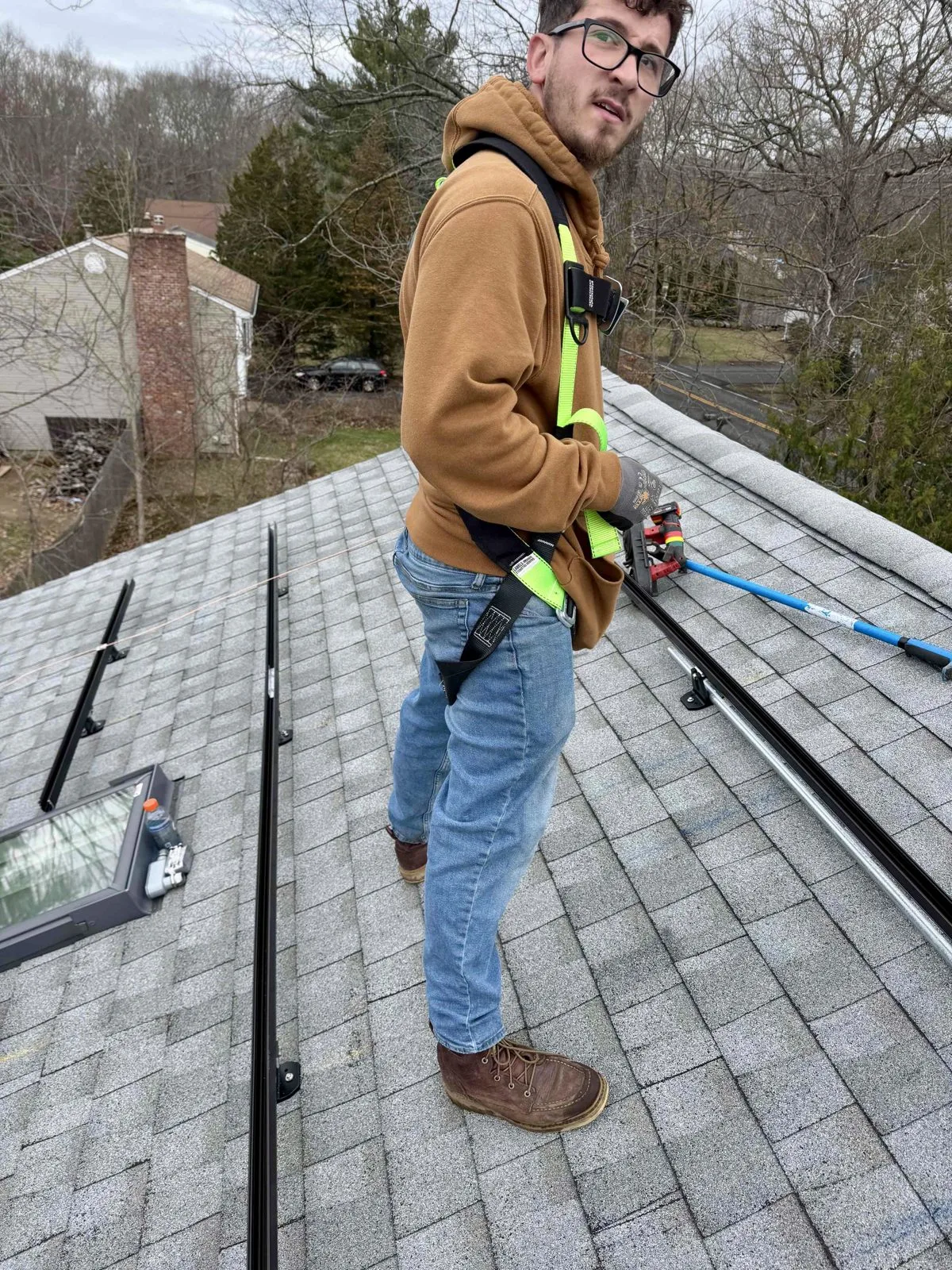
It starts with your last twelve months of bills and a site walk. From there you get a load analysis, a system design, a production model and a full cost picture, with the incentive assumptions shown in plain sight.
Once you approve, we handle the permitting, the structural and electrical engineering, the utility interconnection application and the state program filings. This is the paperwork that stalls many commercial projects, and it is exactly the part we take off your desk.
Then our crews install on a schedule built around your operations. Most disruption is limited to the electrical cutover, which we plan with you well in advance so your business keeps running. When the array is energized, we commission it, walk you through the monitoring and stay with you through activation and beyond.
Timelines vary with system size and utility queue, but you will always know where your project stands, because the team doing the work is the team you talk to.
A commercial array is a 25-plus year asset, and it should be treated like one. Every system we install comes with live production monitoring so you and we can see exactly what it is producing, spot an underperforming string early and act before it quietly costs you output.
Modern commercial panels are durable and largely self-cleaning in New England weather, but flat-roof systems benefit from periodic inspection of racking, connections and roof penetrations. Because our own crews service what we install, a visit is a phone call, not a search for a contractor who has never seen your building.
Panels, inverters and any battery each carry their own manufacturer warranties, typically 10 to 25 years by component, and we back our installation workmanship separately. You get the full documentation, so the value on your books is a documented asset, not a hope.
Working with Rooftop Power has been exceptional. From the beginning everyone at RTP kept me informed at every step. When a hiccup happened it was addressed immediately and resolved.
The installation crew was punctual, respectful, and left the job site spotless. I was particularly impressed with their attention to detail from the first consult to the final inspection.
Had a great solar experience with Rooftop Power from start to finish. We ended up getting a new roof and electrical upgrade for the install and used RP for both.
A load analysis, a production model and a real installed cost, in writing. No pressure, no fluff. Call 401-298-8040.