
Rooftop Power designs and installs residential solar for homes in Rhode Island, Massachusetts and Connecticut using its own licensed crews, with no subcontractors. The company has undertaken 4,000+ projects across solar and roofing. Homeowners can pay by loan, cash, power purchase agreement or lease, and three of the four options start at $0 upfront.
A residential solar system done right starts with your utility bills and your roof, not a sales script. Rooftop Power has undertaken 4,000+ projects across Rhode Island, Massachusetts and Connecticut, every one by our own crews. Here is how a home system actually works, how we build it, and how you pay for it.
Updated October 2026
Rhode Island Energy, Eversource, National Grid and United Illuminating customers have watched supply and delivery rates climb season after season, with no ceiling in sight. Every kilowatt hour your roof produces is one you no longer buy at whatever the utility decides to charge that year.
That is the real argument for home solar. Instead of renting your electricity at a floating rate you do not control, you produce it at a cost that is fixed the day the system switches on. Utility rates keep moving. Your solar cost holds steady for the 25-plus year life of the equipment.
It is also the one home improvement that pays you back every month rather than just sitting there. Your roof is already up there taking the sun. A properly designed array turns that same sunlight into a predictable power cost, more control over your bill, and a home that leans on the grid far less than it used to.
More than a million American households have already made the switch, and Rooftop Power has undertaken 4,000+ projects across Rhode Island, Massachusetts and Connecticut. This page is the honest version of how it works for a home like yours.
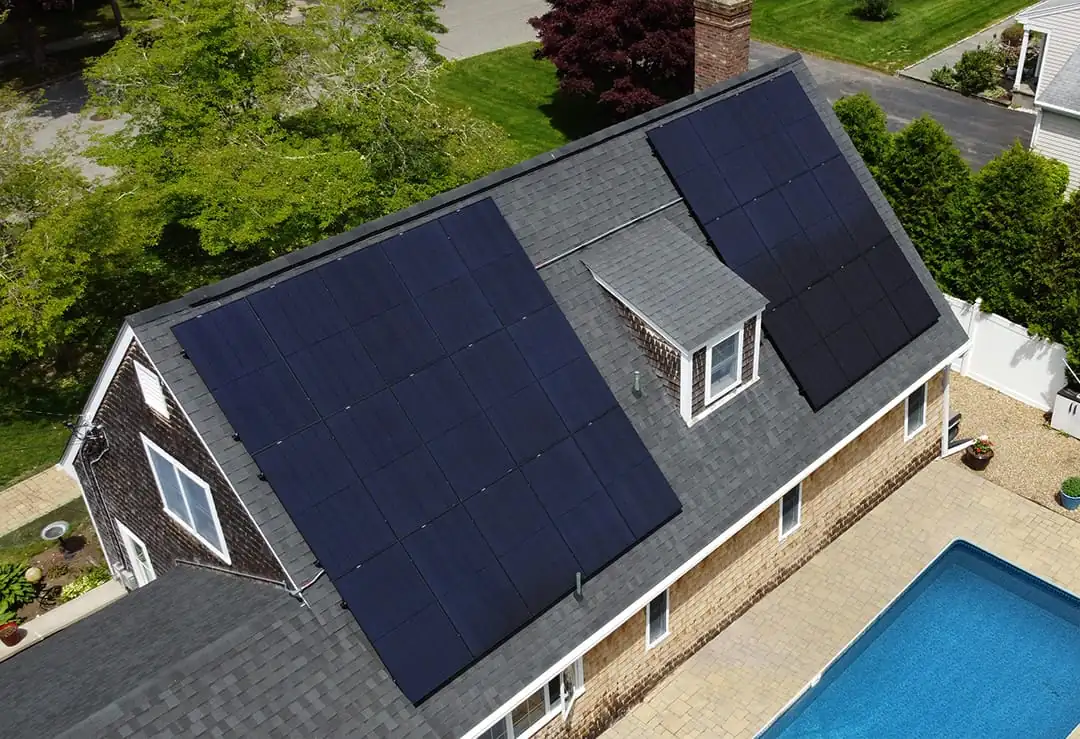
Every residential install is a complete, engineered system, not a box of parts. That means tier-1 all-black monocrystalline panels sized to your actual annual usage, an inverter or microinverters matched to your roof planes, commercial-grade racking and flashing rated for New England wind and snow, and production monitoring you can check from your phone.
Because our electricians and roofers are Rooftop Power employees, the design the engineers approve is the design that goes on your roof. There is no handoff to a subcontractor who has never seen your file and no crew learning your job for the first time on install day.
Every component carries its own manufacturer warranty, typically 10 to 25 years depending on the part, and we back our own installation workmanship on top of that. You get the full documentation in writing, not a verbal promise you can never look up again.
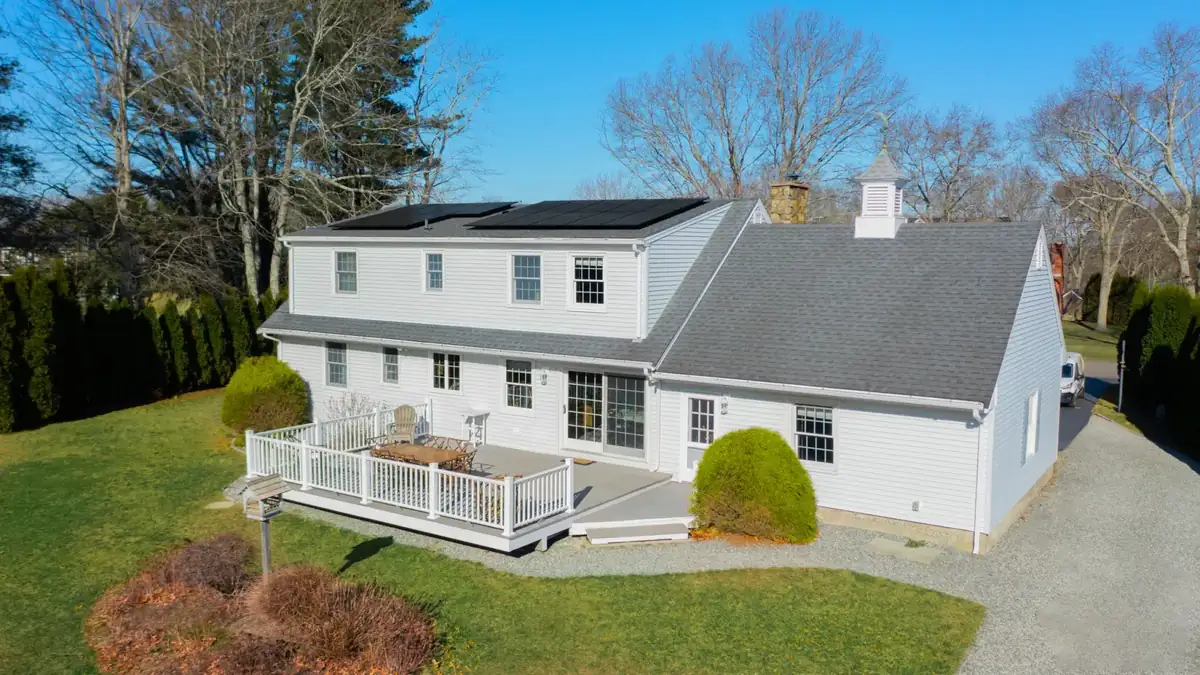
A home system produces more than you use on long summer days and less than you use through winter. Net metering is the mechanism that bridges the two: your summer surplus banks credits that offset the power you draw at night and during the shorter days of winter. It is why a correctly sized system can cover so much of a full year’s bill even though the sun is not shining every hour you need power.
Net metering is active in all three states we serve, and the state-level programs are alive and doing the heavy lifting on the economics. The rules differ by state and utility, so we design around your actual usage and your address, not a brochure average.
Be careful with any company still leading its pitch with the old 30 percent federal tax credit, which ended for residential systems placed in service after 2025. The New England math never depended on that credit alone, and we confirm exactly which current programs your home qualifies for and put it in writing before anything is signed.
There is no single right way to go solar, only the one that fits your situation, and three of our four options start at $0 upfront. A solar loan lets you own the system and its production while spreading the cost over time. Paying cash owns it outright for the strongest long-term position.
A power purchase agreement, or PPA, means you pay only for the power the panels produce at a set rate. A lease is a fixed monthly payment for the equipment. Each fits a different homeowner, and none of them requires you to guess.
We put all four side by side with your real numbers before you sign anything, in writing, and we never push the option that pays us the most. See the full breakdown on our financing page, and remember the honest 2026 reality: state programs like net metering carry the economics now, and we verify exactly what your home qualifies for.
Most of what goes wrong in this industry comes from the handoffs. A salesperson sells, a subcontractor installs, and nobody owns the result when a question comes up two years later. Rooftop Power removes those seams by keeping the whole job in house: our own electricians, our own roofers, our own solar installers, all Rooftop Power employees.
That matters most when your roof needs work. Because we are a roofing company as much as a solar company, we can replace the roof and install the array as one project, on one timeline, under one warranty, instead of you paying to pull panels off and put them back later. One crew, one point of contact, no finger-pointing. See our solar, roofing and battery services for the full list of what that one crew handles.
We are family owned, local, licensed in Rhode Island, Massachusetts and Connecticut, BBB A plus rated, and we hold a 4.8 star rating across hundreds of Google reviews. Shopping for a Massachusetts install? Here is how to choose a Massachusetts solar company. Read those reviews and you will notice how many of them name the actual crew by name. That is the whole point of owning the job start to finish.
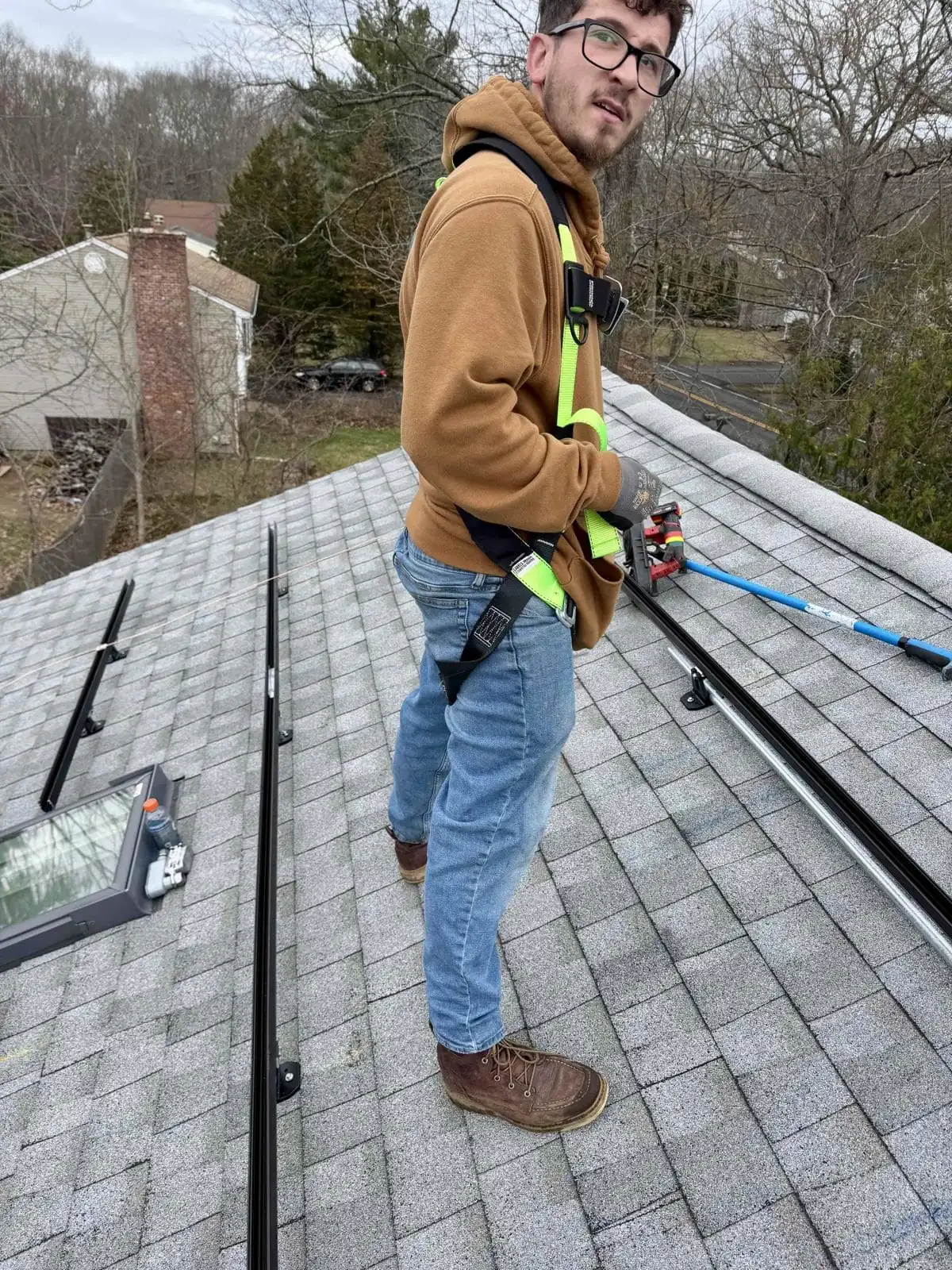
Capes, colonials, ranches, triple-deckers, coastal homes with salt air and wind: we have installed on all of them, and the design changes with the house. Roof age matters most, because quality panels last 25 years or more and you do not want to mount a decades-long system on a roof with only a few years left. If yours is near the end of its life, we tell you and handle the replacement as part of the same project.
Shading, orientation and pitch all get modeled honestly across a full year, not a single sunny month. If the numbers do not work for your lot, you will hear that from us, because a system that underperforms is worse for our reputation than a sale we walked away from.
Once the array is up, it is engineered to sit quietly and produce for the long haul. Monocrystalline panels shed snow off their smooth surface, degrade only slightly per year, and keep working through New England winters. Add the manufacturer warranties on every component and your monitoring app, and you have a system built to outlast the argument that put it on your roof.
The process runs in six clear steps: a free consultation and prequalification, a site survey by our own team, engineering and design approval, permitting and utility interconnection paperwork that we file for you, installation by our crews in one to three days for most homes, then final inspection and activation. The full project typically runs a couple of months from signing to a system that is switched on.
Every project starts with a straight answer, not a hard sell. We look at your recent bills, your roof and your usage, then show you exactly how much of your bill the system covers and what each payment option costs. If solar does not make sense for your home, we say so.
After activation, we stay your point of contact for monitoring, service and warranty claims, from the same local office on West Natick Road in Warwick. The company that designs your system is the company that installs it and the company that answers the phone in year eight.
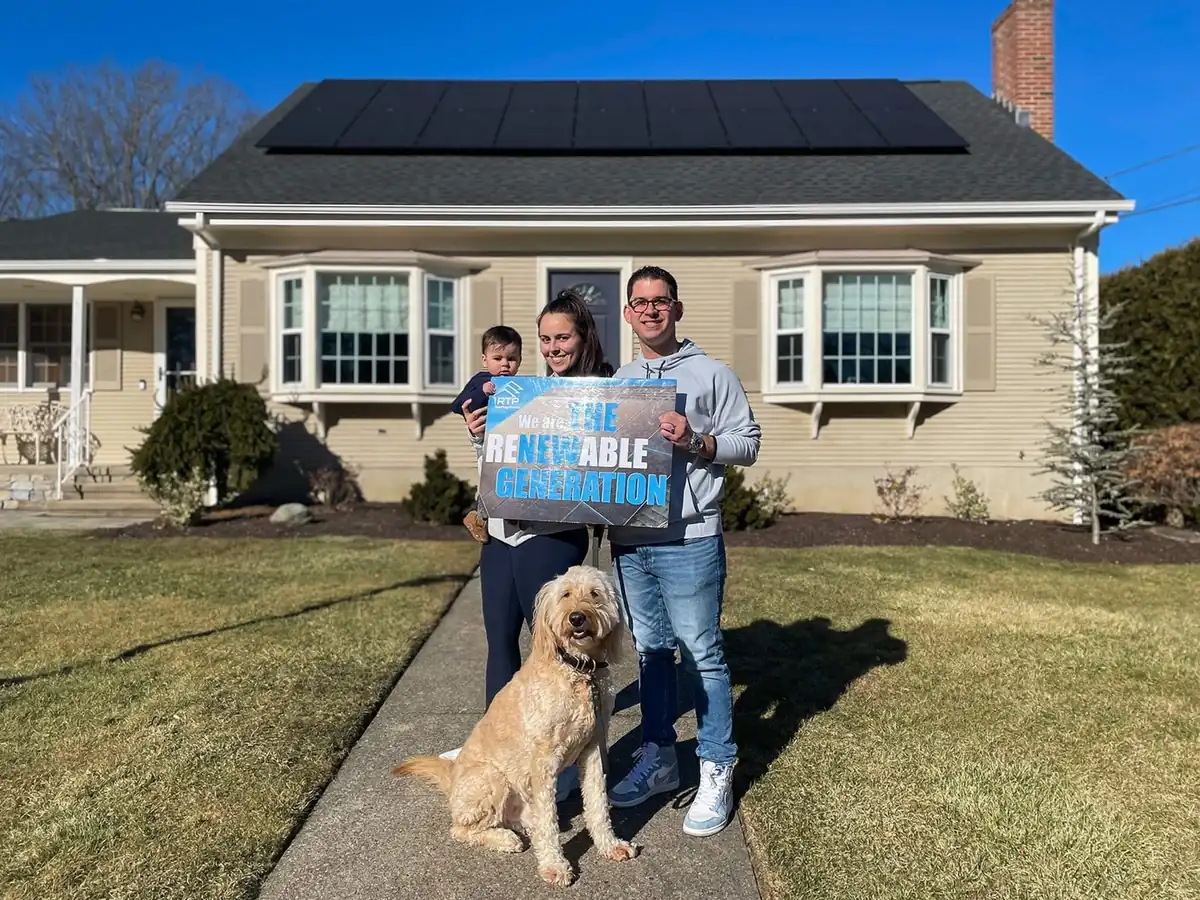
Solar is the foundation, and many homeowners build on it over time. Here is where to look next.
Keep your essentials running through outages and store your daytime surplus for the evening.
Learn More
Same in-house crews. A new roof and solar as one project, one timeline, one warranty.
Learn More
Loan, cash, PPA and lease compared side by side, with three options that start at zero down.
Learn More
Working with Rooftop Power has been exceptional. From the beginning everyone at RTP kept me informed at every step. When a hiccup happened it was addressed immediately and resolved.
The installation crew was punctual, respectful, and left the job site spotless. I was particularly impressed with their attention to detail from the first consult to the final inspection.
Had a great solar experience with Rooftop Power from start to finish. We ended up getting a new roof and electrical upgrade for the install and used RP for both.
Free assessment by a local team. Design, production estimate and full pricing in writing, no pressure. Call 401-298-8040.