
After a real New England storm, a snow-buried array produces nothing, and the wrong removal method (a roof rake, a shovel, a ladder and optimism) damages panels, voids warranties and hurts people. Here is the honest version: most of the time the answer is leave it, and we will tell you when it is not. When clearing is actually worth it, our crews do it safely because we install and service these arrays for a living.
The honest answer up front, before anyone sells you a service you do not need: most solar arrays in New England do not need to be cleared. Panels are dark, smooth tempered glass mounted at an angle, and that combination is built to shed snow on its own. The glass absorbs sunlight, warms a few degrees above the snowpack, and the whole sheet slides off in a slow avalanche once the sun comes back out.
Tilt does most of the work. Even a modest roof pitch means gravity is already fighting the snow for you, and a sunny afternoon in the low twenties is often enough to break the bond and let it go. That is why a light or moderate storm almost never justifies climbing on a roof. Waiting two or three days costs you nothing but a little production you were going to bank against summer credits anyway.
So if you just watched six inches land overnight and you are wondering whether to call, the answer is usually no. Watch the forecast instead. If there is sun in the next few days and the pile is not crusted solid, your array will very likely clear itself before any crew could safely get to it.
We would rather tell you that and keep your money in your pocket than sell you a removal you did not need. The homeowners who trust us in a real emergency are the ones we were straight with in a fake one.
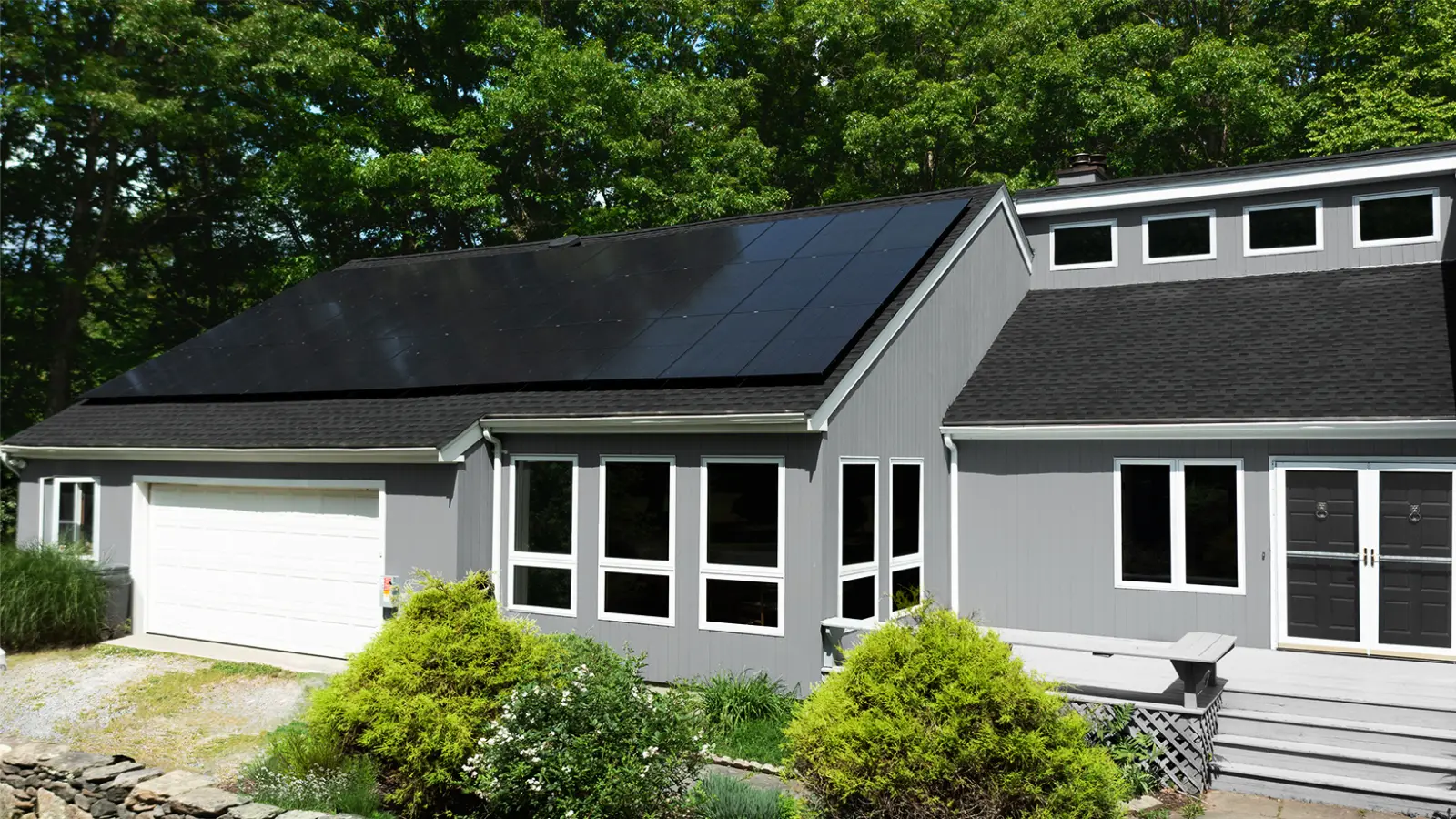
There are real situations where clearing pays for itself, and knowing the difference is the whole point. Removal earns its cost when heavy, crusted snow sits through an extended cold stretch with no sun in the forecast, so the array cannot self-clear and the lost production stacks up day after day.
It is also worth it when your system is carrying a strong production month you are counting on, when a storm dumps a foot or more and refreezes into a solid slab, or when snow and ice load builds unevenly at the array edge and starts to concern you about the roof itself. In those cases waiting is not free, it is a real production loss or a real risk.
The tell is usually the forecast, not the storm. A foot of snow followed by three sunny days clears itself. The same foot followed by a week of gray, sub-freezing weather is when a phone call makes sense. We read that with you honestly when you call, even when the answer is save your money and wait for Thursday’s sun.
Panel glass is tough against sky, hail and decades of weather, but a metal roof-rake edge dragged across the surface, or a shovel finding a frame corner, is exactly the point load it was never built for. Scratched glass diffuses light and cuts production permanently. Cracked cells fail invisibly, so you often do not see the damage until your production drops months later. Warranty adjusters recognize rake and shovel marks on sight, and that damage is not covered.
Then there is you. Icy roofs, hidden edges under snow, ladders on frozen ground and cold hands are how people end up in the emergency room every winter. No amount of banked production is worth a fall from a second story onto a driveway. This is genuinely dangerous work, and it is the reason we do not recommend the do-it-yourself route even to handy homeowners.
There is also the wiring and flashing you cannot see. A rake or shovel poking around under the snow can catch a conduit, a clamp or the roof penetrations that keep water out. Our crews know exactly where all of that lives because we put it there, and we are on roofs every working day of the winter.
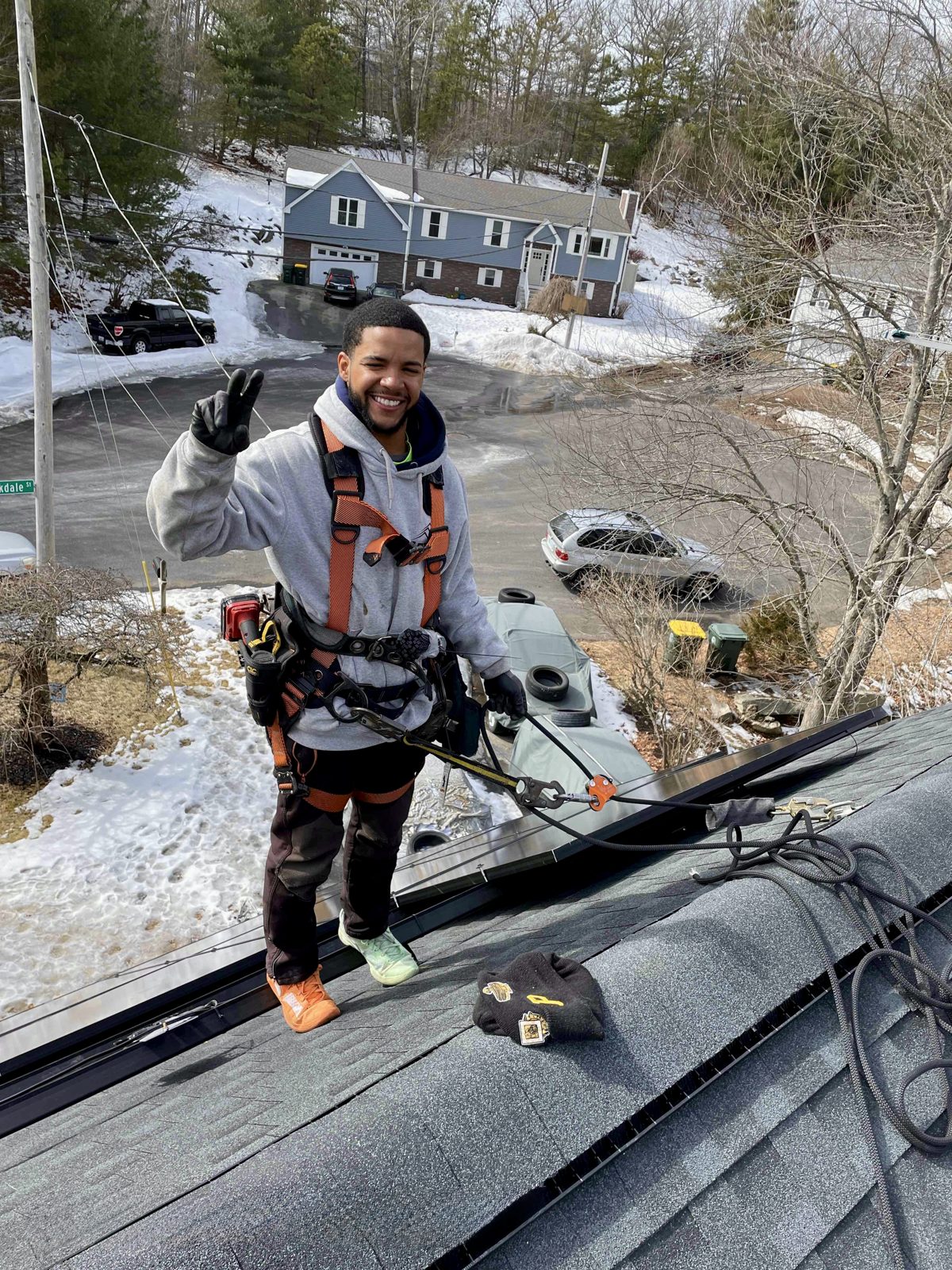
When removal is the right call, the method matters as much as the decision. We use soft, non-marring tools designed for panel glass, never a metal edge, so there is no risk of the scratches and point loads that quietly cost you production for the life of the system. The goal is to break the snow loose and let it slide, not to scrape the glass clean.
Every job runs on real fall protection, not a ladder and luck. Winter roofs are ice, and we treat them that way, with the harnesses, anchors and footing our installers use all season. We also watch the array edge and the eaves for ice-dam behavior, because that is where snow melt and refreeze can start to threaten the roof rather than just the panels.
Because we install and service these systems, we clear them the way the equipment wants to be cleared. We know how the panels are clamped, where the conduit runs, and how much load the racking is rated for. That is the difference between a crew that happens to own a ladder and the crew that built your array.
Here is the context that takes the panic out of a snowy roof: a well-designed New England system is not supposed to carry its own weight in December. It is supposed to bank surplus in the long days of summer and draw that credit back down through the short, low-sun months. That is net metering, and it is exactly why a few snowed-in days do not wreck your annual math.
Net metering is active in all three states we serve. Your July and August overproduction turns into credits that offset the power you pull from the grid in January, whether the sky is gray or your panels spent a couple of days under snow. We size systems around your full-year usage for this reason, not around a single sunny month, so a normal winter is already priced in.
If you have battery storage, the buffer is even larger, because stored summer and shoulder-season energy can cover essentials while the array digs out. Utilities vary (Rhode Island Energy in RI, Eversource and National Grid in MA, Eversource and United Illuminating in CT), but the principle holds everywhere: a correctly designed system expects winter, and a few buried days are noise, not a crisis.
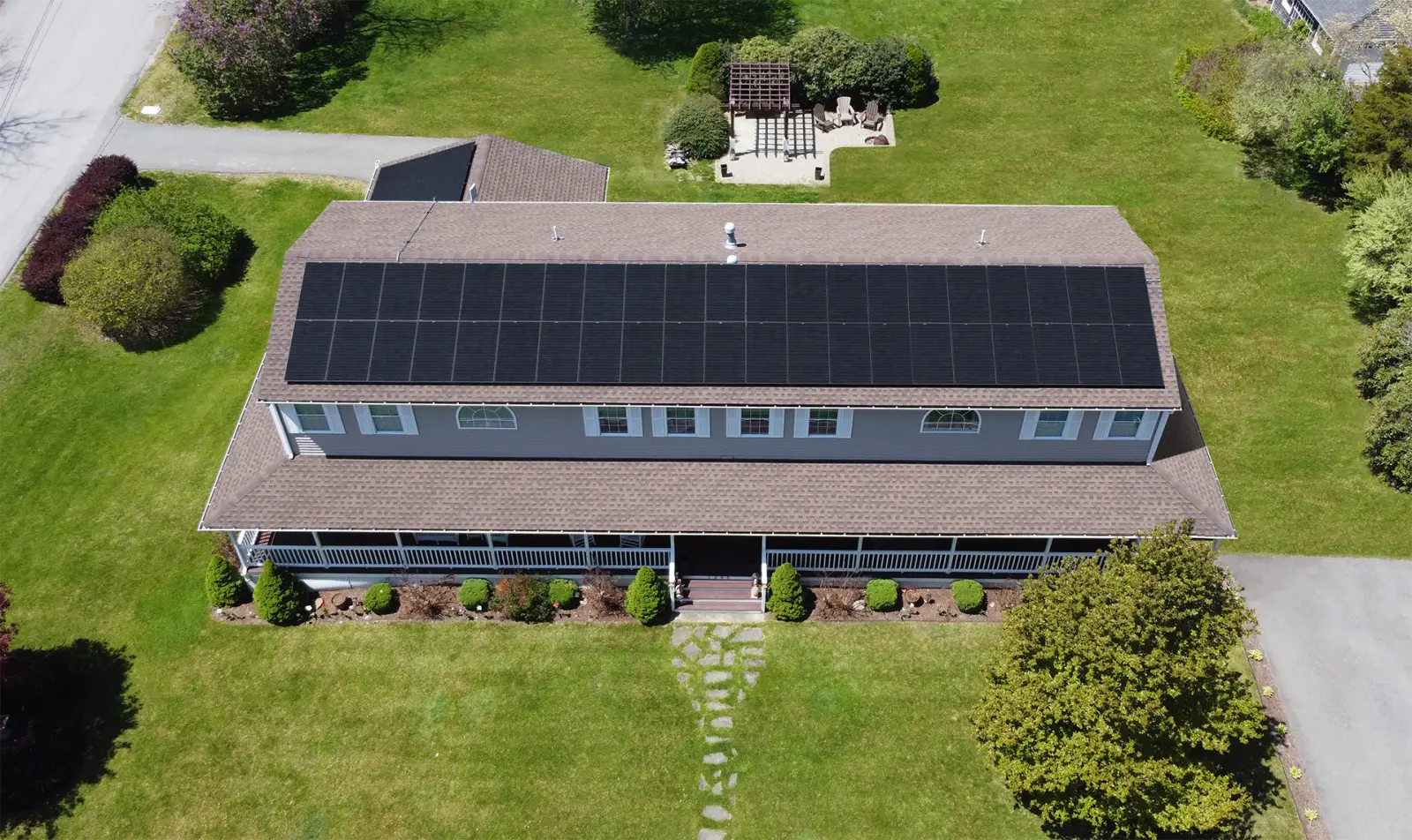
Homeowners sometimes worry that snow sitting on the panels will overload the roof. In almost every case it will not. Modern panels and racking are engineered for New England snow loads, and the panels themselves add very little to what your roof was already built to hold. The snow load your roof cares about is the snow on the whole roof, not the thin layer riding on the glass.
The situation that does deserve attention is a deep, wet, refrozen pack across a large or low-pitch roof, especially where drifting piles it unevenly on one side. That is a roof-structure question more than a solar question, and it is worth a look regardless of whether you have panels. Ice damming at the eaves is the other winter risk, where melt refreezes at the cold edge and backs water up under shingles.
Because we are a roofing company as much as a solar company, we can look at both at once. If your concern is really the roof and not the array, we tell you that, and the roofing side of the house handles ice dams and winter leaks. One crew, one conversation, no finger-pointing between a solar contractor and a roofer.
Snow is one winter concern among several. If you are thinking about how your system rides out the cold season, these are the related services homeowners pair with it most often.
Winter is when weak connectors and stressed equipment show themselves. A seasonal check catches problems before they cost you production.
Learn MoreIce dams, drifting load and winter leaks, handled by the roofing side of the same house that installed your panels.
Learn MoreStorm-season resilience beyond the panels. Stored energy covers your essentials when the grid goes down in a Nor’easter.
Learn MoreThe one thing worth doing before a storm is knowing who to call. When a big system rolls through New England, every homeowner with a snowed-in array is on the phone at once, and safe roof crews are a limited resource. The customers we can get to first are the ones already in our system.
Existing Rooftop Power customers get priority in storm season, which is one more reason it pays to have the company that installed your array on speed dial rather than searching for whoever will climb a roof in a whiteout. We would rather triage honestly, clear the arrays that genuinely need it, and tell everyone else to wait for the sun, than send crews up roofs that did not need clearing.
So before the next storm, save the number. Call us before you climb, and let us tell you whether this is a Thursday-sun situation or a real one. Straight advice first, safe removal only if it is actually worth it: 401-298-8040.
Working with Rooftop Power has been exceptional. From the beginning everyone at RTP kept me informed at every step. When a hiccup happened it was addressed immediately and resolved.
The installation crew was punctual, respectful, and left the job site spotless. I was particularly impressed with their attention to detail from the first consult to the final inspection.
Had a great solar experience with Rooftop Power from start to finish. We ended up getting a new roof and electrical upgrade for the install and used RP for both.
401-298-8040. Straight advice first, safe removal only if it is actually worth it.