
Last updated: July 2026
Searching for the best solar company in Massachusetts turns up a wall of five star claims and number one badges, and almost none of them tell you how to actually judge one installer against another. This guide gives you the criteria that matter, so you can walk into any quote knowing what to look for, and then makes our own case honestly against that same standard.
Any company that flatly calls itself the number one or best rated solar installer in Massachusetts is telling you about its marketing, not its work. There is no official ranking that crowns a single winner, and the right installer for a simple asphalt roof in Worcester may not be the right one for an aging slate roof on the South Shore.
So instead of chasing badges, judge every company you talk to against the same short list of things that actually predict a good outcome. The good news is that these are not subjective. Licensing, crew structure, warranty terms and verifiable reviews are all things you can check, and a trustworthy company will answer every one of them without flinching.
That is the honest frame for this page. We will lay out the criteria first, then show you where Rooftop Power stands on each one, so you can hold us to the exact same standard you hold everyone else to.
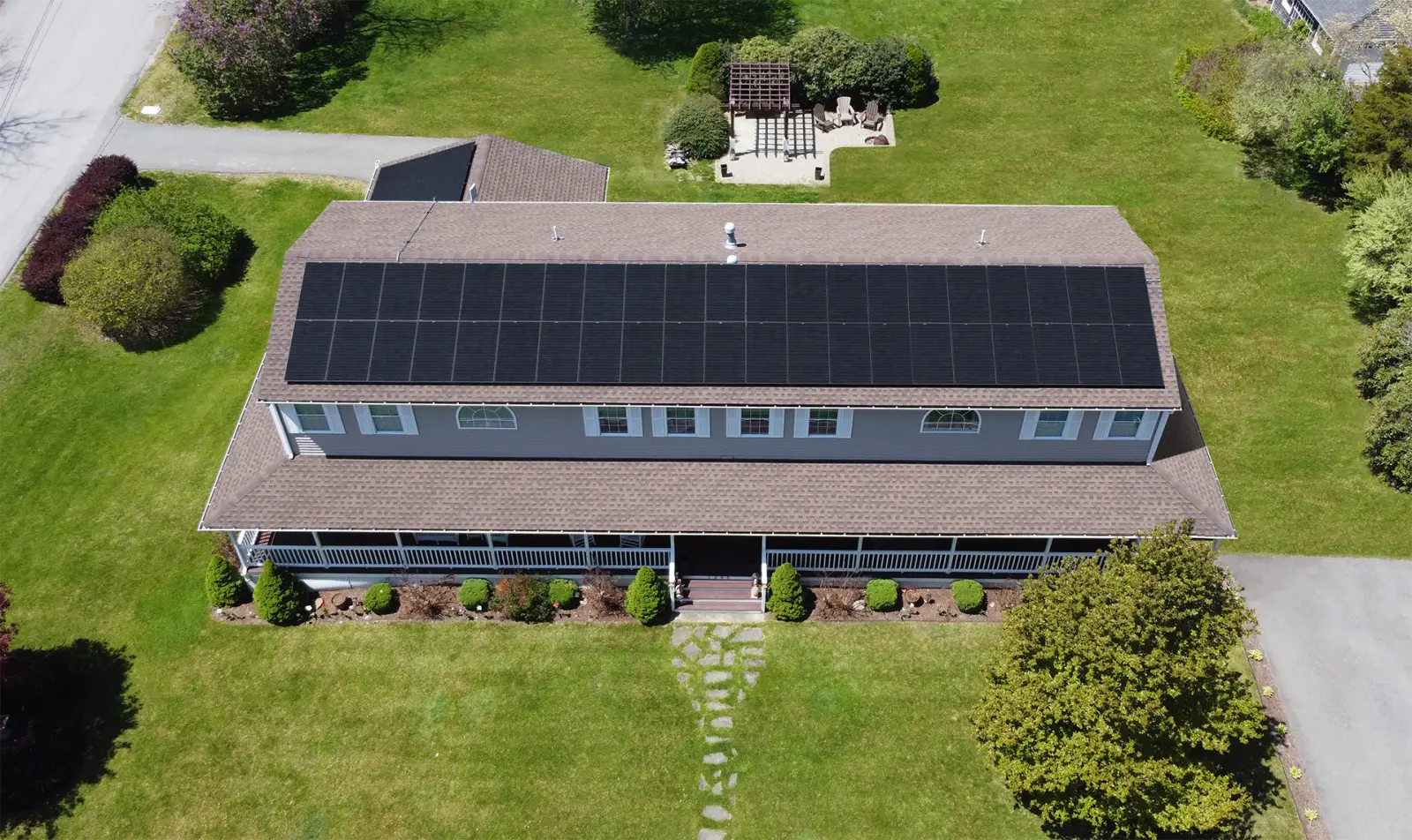
Use this as a checklist on every quote you get. Ask each question out loud and watch how easily the answer comes. A strong company has these answers ready, in writing, and a weak one gets vague.
The single most important distinction is who actually shows up on your roof. A company with in house crews is accountable to you for the workmanship, because the people who install the system are the same people who have to stand behind it. A company that subcontracts the install hands your roof to whoever is available that week, which complicates both quality and any warranty claim years later.
Before anything else, a solar company working on your Massachusetts home should hold the proper licenses to do both the electrical and the construction side of the job, and it should be willing to show you the numbers rather than wave the question away. This is the floor, not a bonus, because unlicensed or improperly licensed work can create safety issues, fail inspection and jeopardize your ability to claim warranty or program benefits later.
Rooftop Power is licensed across all three states we serve. In Massachusetts we hold electrical license number 17273 and construction supervisor license number 155831, alongside our Rhode Island and Connecticut licenses. We are also BBB accredited with an A rating, which is a third party check on how we handle customers, not something we can grant ourselves.
Ask any installer for its license information the same way you would ask a contractor before a kitchen remodel. A company that answers plainly is showing you respect. One that gets evasive is telling you something too.
This is the criterion most homeowners never think to ask about, and it is the one that shapes your experience more than almost anything else. Many companies that sell solar do not install it. They close the deal and hand the physical work to a subcontracted crew, which means the people who promised you the world are not the people drilling into your roof, and the accountability chain breaks the moment something goes wrong.
Rooftop Power runs its own in house installation crews. The people who design your system, pull the permits and put panels on your roof work for us, which means one company is accountable from the first conversation to the final inspection and every service call after. When you call about your system in year three, you are calling the company that built it, not a sales office that has to track down a contractor it used once.
It also shows up in quality. A crew that installs under one company’s name, to one company’s standard, gets consistent in a way that a rotating bench of subcontractors cannot. That consistency is a large part of why our reviews read the way they do.
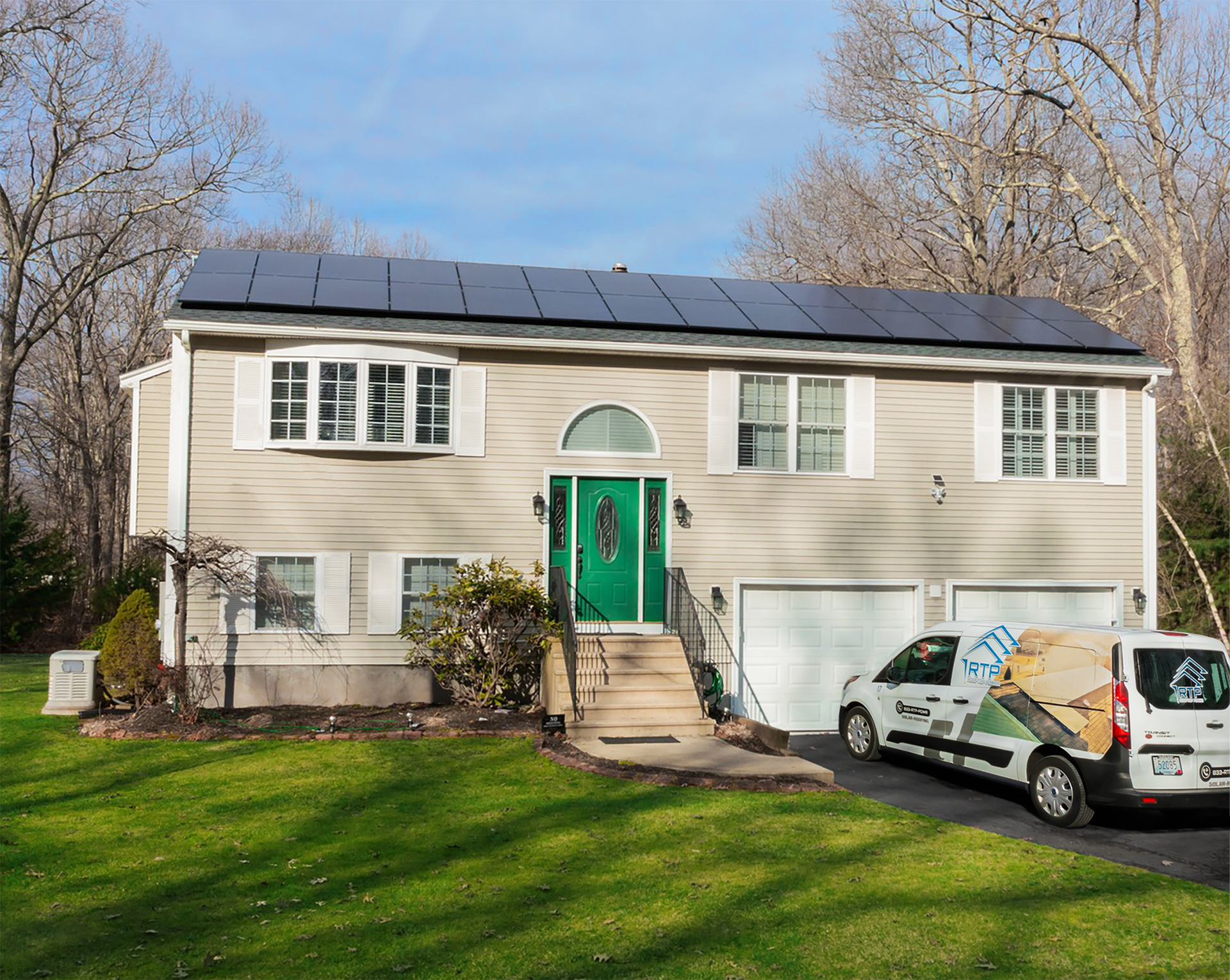
Here is a question that quietly decides whether a solar project goes smoothly: what happens if your roof is not in good enough shape to carry panels for the next 25 years? For most solar companies, the honest answer is that it becomes your problem. They install solar, not roofs, so they either bolt panels onto a tired roof anyway or send you off to find a roofer and coordinate the timing yourself.
Rooftop Power does both roofing and solar with our own crews. If your roof needs replacing before the panels go up, we can handle it as one coordinated project, so you are not managing two companies, two schedules and two chances for each to blame the other. It also means the roof and the solar are warrantied by the same company that did both.
For a lot of Massachusetts homes, especially older ones, this is the difference between a clean project and a headache. It is also a genuine differentiator, because a pure solar installer simply cannot offer it, and it is worth asking every company you talk to what its plan is if your roof needs work.
Testimonials a company picks for its own website tell you what it wants you to see. A large volume of independent reviews tells you what customers actually experienced, which is why review count and rating together matter more than any single glowing quote.
Rooftop Power holds a 4.8 star rating across 890 Google reviews, and has undertaken 3,000+ solar projects. We share those numbers because you can verify them yourself on our Google profile, not because we assigned them to ourselves. A high rating on only a dozen reviews is easy to manufacture. A high rating that holds up across hundreds is a pattern.
When you compare companies, look at both numbers on each. A company with a great rating and almost no reviews has not been tested. A company with many reviews and a mediocre rating has been tested and found wanting. The combination of a strong rating and real volume is what you are looking for.
Just as important as knowing what good looks like is knowing what to avoid. None of these on its own is proof of a bad company, but any of them should make you slow down and ask more questions before you sign anything.
The biggest one is a guaranteed dollar savings figure thrown at you before the company has studied your roof and your bills. Your result depends on your usage, your roof, your utility and how you pay, so a specific savings promise up front is a sales tactic, not a fact. We never quote one, and you should be wary of anyone who does.
Choosing a company is one decision. Here are the related pages homeowners read alongside it:
What systems actually cost, what drives the price, and how SMART and net metering change the math.
Learn MoreSMART, net metering and ConnectedSolutions explained for your Massachusetts home.
Learn MoreSee real Rooftop Power solar and roofing projects across New England.
Learn MoreBook a free, no pressure assessment and see the licensing, crews, warranty and real numbers for yourself, in writing. Call 401-298-8040 or request a quote online.