
An electric vehicle is only as cheap to run as the power that charges it. Rooftop Power installs Level 2 home chargers across Rhode Island, Massachusetts and Connecticut, and when the charger pairs with rooftop solar, your commute runs on power you produced yourself.
The cord that comes with your car is Level 1. Plugged into a standard 120-volt wall outlet, it adds three to five miles of range per hour. For a long commute or a two-car household, that is not enough to fully recharge overnight, so you start each morning behind where you want to be.
A Level 2 charger runs on a 240-volt circuit, the same kind of service a dryer or a range uses. That jump in voltage adds roughly twenty-five to forty miles of range per hour depending on the charger and the car, which turns almost any overnight into a full battery. You stop planning your week around charging stops and stop paying public-charger pricing.
The difference is not just speed, it is how you live with the car. A properly sized Level 2 setup means you wake up full every day, road trips get their own slower routine, and the vehicle quietly becomes the easiest thing in your driveway to keep fueled.
We install the charger your car and your electrical panel can actually support. That means a load calculation first, then the right circuit, the right charger and a clean, permitted installation by our own licensed electricians, not a guess based on what fit at the last house.
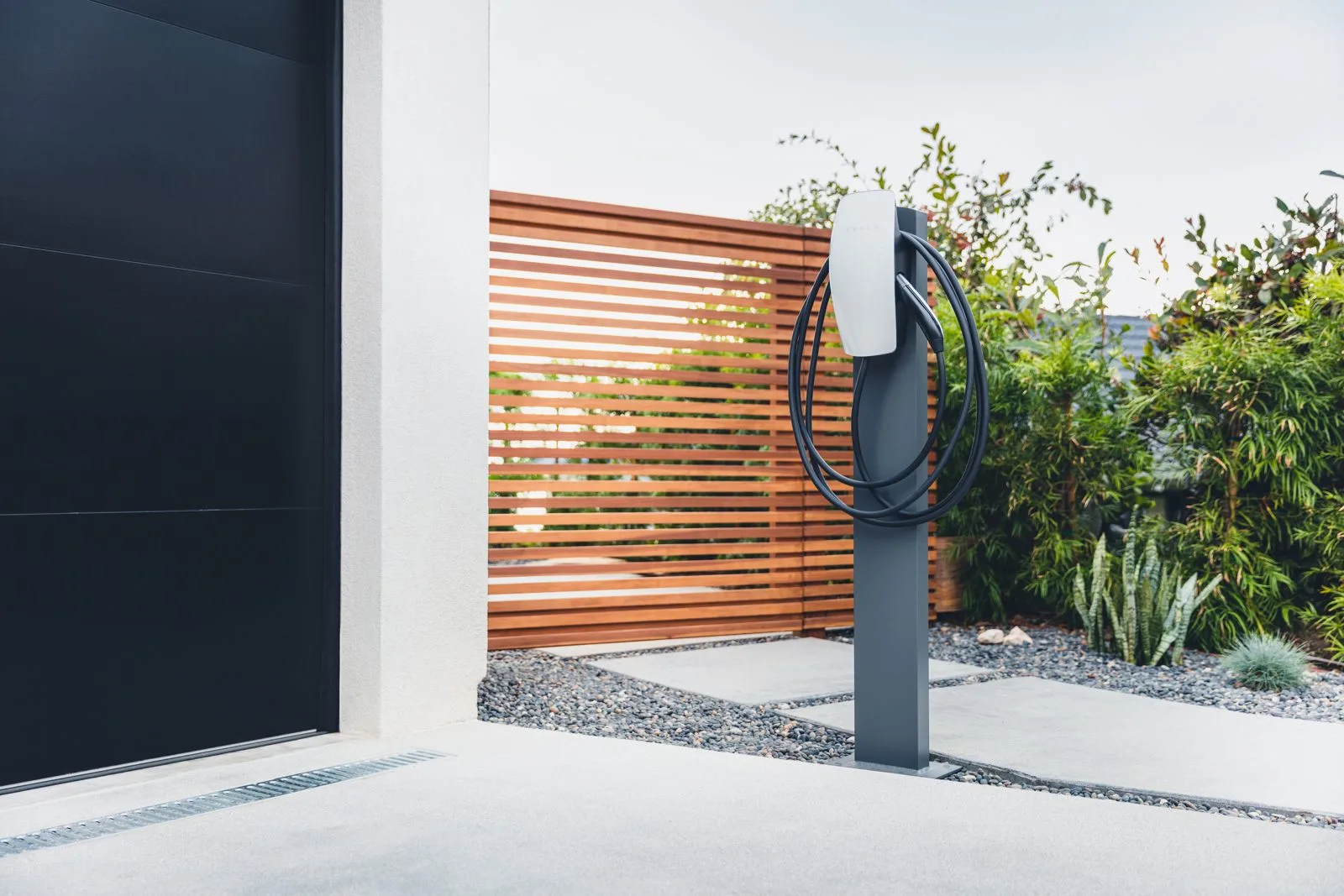
Charging an electric car adds real kilowatt hours to your bill, often as much as a second refrigerator running all night. If the utility supplies those kilowatt hours, your fuel cost floats with Rhode Island Energy, Eversource, National Grid or United Illuminating rates, whatever they happen to be that season.
If your roof supplies them, the math changes. The power that fills your battery is produced at a cost that was set the day your solar system turned on, not at whatever the grid charges tonight. Charging on your own production is the closest thing to fixed-cost driving there is.
When we design a solar system for a household that drives electric, we include the car in the sizing. The array is built for the house you actually run, commute and all, so the miles you drive come off your own roof instead of the meter.
Already have solar? We check your system’s headroom before adding the charger load, so the addition is clean and your production still lines up with the way you use power across a full year.

A Level 2 charger is a large, steady load. A common home charger draws 40 amps continuously, and some draw up to 48 or 60. Under electrical code a continuous load is calculated at 125 percent, so a 48-amp charger has to be treated as a 60-amp circuit. That is the first thing our electricians check before anything gets mounted.
Many New England homes have the headroom to add a charger without touching the main panel, especially newer 200-amp services. Older 100-amp panels, or homes already running central air, an electric range and a heat pump, sometimes do not, and the honest answer there is that a change is needed before the charger goes in.
When there is not enough capacity, the fix is usually one of two things: a service or panel upgrade to make room, or load management that lets the charger share an existing circuit safely. We size the solution to your home and tell you which one it is before you commit, not after the truck shows up.
Because we handle the electrical work in house, a panel upgrade and the charger install become one project on one timeline. You are not coordinating an electrician, an inspector and a charger installer separately and hoping the dates line up.
There are two clean ways to install a Level 2 charger. Hardwired means the charger is wired directly into the circuit, which is the most robust option, is required for the highest amperage chargers, and removes the plug as a potential failure point. Plug-in means the charger connects to a dedicated NEMA 14-50 outlet, which makes it easier to swap the unit or take it with you if you move.
For a charger you plan to keep in one place at higher power, we usually recommend hardwiring. For a household that wants flexibility or expects to change vehicles, a properly installed 14-50 outlet is a reasonable call. We walk through the tradeoff with your actual charger and panel in front of us.
Load management is the quiet hero when a panel is tight. A load-managing charger or a small monitoring device watches the total draw on your service and throttles the charger when the house is using a lot of power, then lets it run full when the house is quiet. In practice that means you can often add a charger without a full service upgrade, because the charger simply waits its turn.
Smart chargers also let you schedule charging for overnight hours, track how much energy each session used, and, on some models, prioritize charging from your solar production. We set these features up so they actually work for your routine instead of sitting unused in an app.
A 40 to 60 amp continuous load deserves respect. Done wrong, an EV circuit is a real fire risk, which is exactly why undersized wire, an overloaded panel or a skipped inspection are not corners worth cutting to save a few dollars.
Every Rooftop Power charger install starts with a proper load calculation, uses correctly sized wire and breakers for the charger and the run, and is pulled as a permitted job. Our electricians hold licenses in Rhode Island, Massachusetts and Connecticut and do this work daily, not as an occasional side task.
The permit and the inspection are not red tape, they are protection. A permitted, inspected install keeps your homeowner’s insurance valid, protects your equipment warranty, and gives you a documented record that the work was done to code. If your panel needs an upgrade to support the charger, we handle that as part of the same project.
The crew that shows up is the same in-house crew that shows up for our solar and roofing work, which is a big part of why so many of our reviews name the people by name.
The honest version is this: charging at home is almost always cheaper per mile than public DC fast charging, and at current New England pump prices it is usually cheaper than gasoline too. But the exact number depends on your electric rate, your car’s efficiency and how you drive, so we do not hand out a single guaranteed figure and neither should anyone else.
A useful way to think about it: an efficient EV uses somewhere around a quarter to a third of a kilowatt hour per mile. Multiply that by your utility’s rate and you get your rough cost per mile from the grid. New England electricity is not cheap, so that number matters, and it is one reason the solar pairing is so compelling.
When the power comes off your own roof instead of the meter, the cost per mile is set by your solar production cost, which does not move with utility rates. That is where home charging goes from cheaper to genuinely fixed and predictable for the life of the system.
Time-of-use rate plans, where the utility charges less overnight, can lower the cost further if you schedule charging for off-peak hours. We set the charger’s schedule to match whatever rate plan makes sense for your home.
The three states we serve all have utility and state programs aimed at home EV charging, and they change often. We treat any rebate as something to confirm for your exact address and utility before you count on it, never as a headline number to lure you in.
In Rhode Island, Rhode Island Energy has offered managed charging and off-peak charging incentives, and the state has run rebate programs for electric vehicles and home chargers through its energy office. In Massachusetts, Eversource and National Grid run managed charging and demand-response programs that credit customers for charging at the right times, alongside statewide EV incentives.
In Connecticut, Eversource and United Illuminating operate a residential EV charging program that has included charger rebates and ongoing credits for enrolling in managed charging. Enrollment rules, credit amounts and eligible equipment differ by utility and shift from year to year.
Because the details move, we verify what is currently available for your utility and your home before you sign anything, and we put what you actually qualify for in writing. Solar customers also keep the state solar programs already in place, including net metering across all three states.
A charger is often the first step, not the last. Homeowners who add an EV charger frequently look at solar to fix the fuel cost, a battery to charge the car on stored production, or panel work to make room for all of it. Because we own the whole job in house, those pieces fit together instead of fighting each other.
Working with Rooftop Power has been exceptional. From the beginning everyone at RTP kept me informed at every step. When a hiccup happened it was addressed immediately and resolved.
The installation crew was punctual, respectful, and left the job site spotless. I was particularly impressed with their attention to detail from the first consult to the final inspection.
Had a great solar experience with Rooftop Power from start to finish. We ended up getting a new roof and electrical upgrade for the install and used RP for both.
A free assessment of your panel, your usage and what solar plus a charger would look like for your home, in writing.