
Navigating the complexities of “roof and solar warranties” can be a challenging task for homeowners, especially when both systems are integrated into a single project. This article will clarify what warranties cover, how they differ, and what homeowners should know to ensure they are adequately protected. Roof warranties typically cover specific aspects of the roofing system, while solar warranties may address the unique challenges that come with solar panel installation. Thus, understanding these warranties is crucial for homeowners to navigate potential claims and repairs effectively. This guide will walk you through the essential elements of warranties for roofing and solar installations, including what gaps may exist and how homeowners can file claims successfully.
What Does a Roof Warranty Typically Cover in Southern New England?
A roof warranty is a critical component for homeowners, providing protection against certain defects and issues that may arise after installation. Typically, roof warranties cover workmanship and materials, ensuring that any faults due to installation errors or product imperfections are addressed. In Southern New England, where weather conditions can significantly impact roofing integrity, regional factors also play a role in warranty terms. Homeowners should be attentive to the specifics outlined in their warranty documents, such as duration, exclusions, and any state-specific regulations, particularly those relevant to Rhode Island, Massachusetts, and Connecticut.
How Do Regional Building Codes in RI, MA, and CT Affect Roof Warranty Terms?
Building codes in Rhode Island, Massachusetts, and Connecticut have a substantial impact on the warranty terms of roofs. These codes dictate the specific materials and installation practices that must be adhered to in order for warranties to remain valid. In some cases, failing to comply with these regulations can void warranties, as the installation may not meet the requisite safety and structural standards. Homeowners should familiarize themselves with “local regulations” and ensure that their contractors are compliant to ensure warranty protections remain intact.
How Do Solar Panel Warranties Complement or Differ from Roof Warranties?
Solar panel warranties operate under different parameters than traditional roof warranties. While roof warranties typically focus on material defects and workmanship, solar warranties extend to functionalities unique to solar systems, including inverter performance and panel efficiency. It’s important for homeowners to understand the specific coverage periods and claims processes for each warranty type. Both types are intended to protect against faults, but they also highlight different aspects of installation and maintenance. Having a combined approach with both warranties can create a more secure framework for homeowners to address potential issues.
What Limits Exist for Solar Warranties Regarding Roof Penetrations?
Solar warranties often have specific limitations regarding coverage associated with roof penetrations. These limitations can leave homeowners vulnerable if not clearly understood. For example, if solar panels are installed incorrectly or if roof penetrations lead to leaks, the warranty may not cover the resulting damage because it falls outside the typical coverage scope. Homeowners should ensure that both their roofing and solar panel installations are done correctly to avoid these potential pitfalls and the associated costs which could arise from warranty exclusions.
Who Is Responsible for Roof Leaks Caused by Solar Panel Installation?
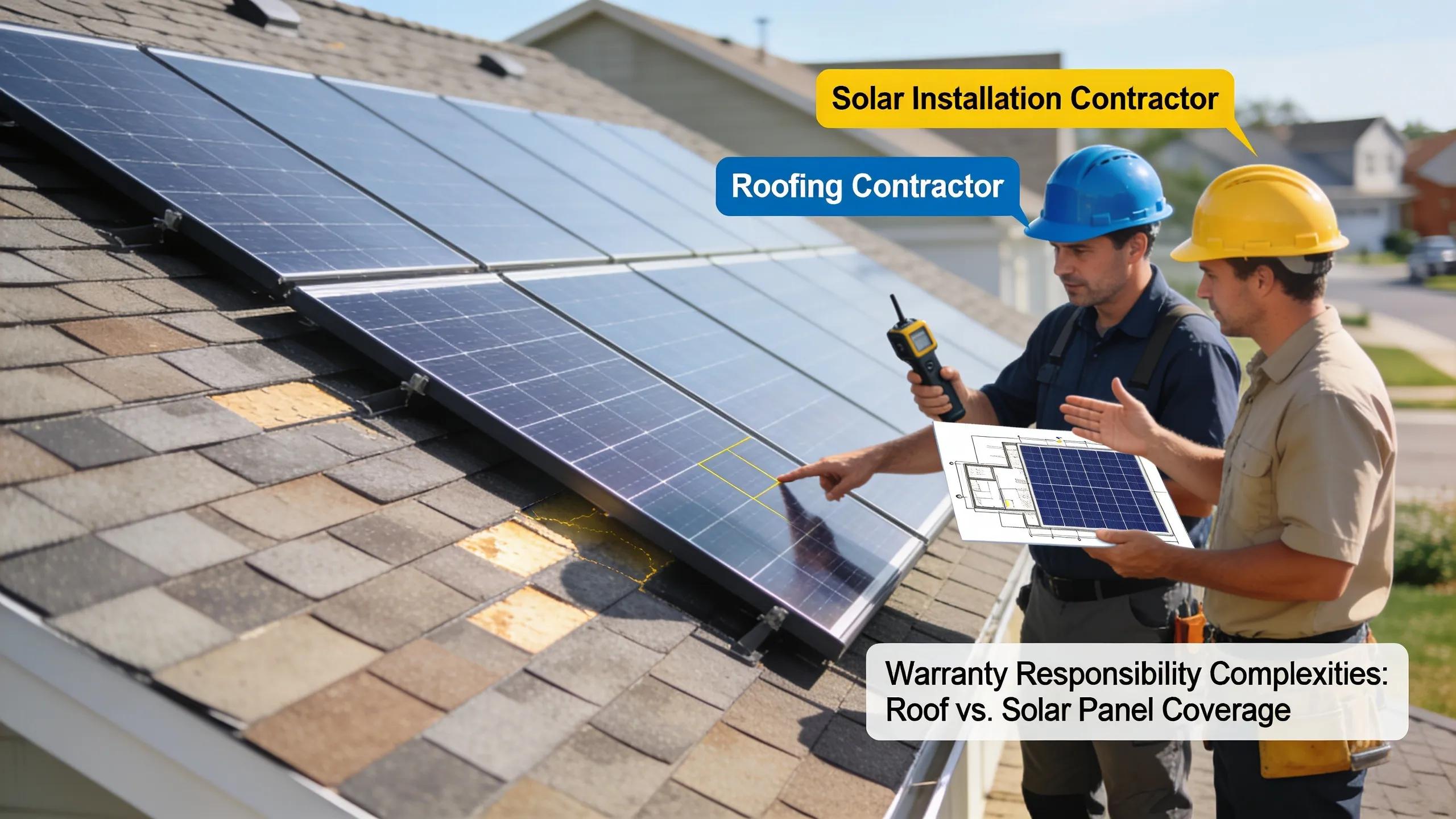
Determining liability for roof leaks resulting from solar panel installation can often be complex. Typically, the responsibility lies with the contractor who installed the solar system, especially if the leaks are a direct result of their installation practices. Understanding the workmanship warranty terms can clarify who to hold accountable in such situations. “Rooftop Power” emphasizes a single point of accountability in handling claims related to roof leaks caused by solar installations, ensuring clarity for homeowners navigating these intricate warranty networks. If you have questions, you can reach out to Rooftop Power at (401) 298-8040 for guidance.
What Are the Insurance and Warranty Claim Procedures for Leak Repairs?
Homeowners must understand the procedures for initiating insurance and warranty claims for leak repairs effectively. Typically, the first step involves contacting the warranty provider or contractor responsible for the installation. Homeowners should gather documentation, including pictures of the leaks, descriptions of the problems, and any past communication with the installer. Each warranty provider may have specific claims processes, so it’s crucial for homeowners to familiarize themselves with these steps and follow them closely to expedite their claims. Rooftop Power is ready to assist with any claims support needed.
What Are the Benefits and Features of Combined Roof and Solar Panel Warranty Programs?

Combining roof and solar panel warranties can offer several advantages. Homeowners frequently benefit from enhanced coverage that streamlines the claims process, providing a single point of contact for issues related to both systems. Key features to consider when looking at combined programs include:
- Coverage Enhancements: Broader protections against potential issues that may arise from either system.
- Transferable Warranties: Potential to transfer warranties to future homeowners, adding value to the property.
- Cost Savings: Efficiency gains through bundled services can lead to reduced overall costs.
These benefits illustrate how combined warranties can significantly enhance peace of mind for homeowners, supported by streamlined claims processes.
What Should You Look for When Choosing a Combined Roof and Solar Warranty?
When selecting a combined roof and solar warranty, homeowners should consider several key factors to ensure comprehensive coverage. Important criteria include:
- Comprehensive Coverage: Evaluate what each warranty includes regarding repairs, replacements, and exclusions.
- Transferability Options: Determine if the warranty can be transferred if the home is sold and what conditions apply.
- Clarity of Documentation: Ensure that all warranty documents are clear, and specifically outline what is covered and any conditions or limitations.
Understanding these elements can help homeowners make informed decisions and choose the best warranty solutions.
How Can Homeowners File Effective Warranty Claims for Roof and Solar Issues?
Filing a warranty claim can seem daunting, but understanding the process can simplify the task. Homeowners should take the following steps when filing claims for roof and solar issues:
- Document the Issue: Take clear photographs and keep records of all communications regarding the issue.
- Submit Required Documentation: Ensure all necessary documents are submitted according to the warranty provider’s specifications.
- Follow Up: After submitting a claim, it’s advisable to follow up and stay in communication with the warranty provider to expedite the process.
By following these steps, homeowners can enhance their likelihood of successful claims outcomes, thus ensuring their investments are protected.
What Ongoing Maintenance and Prevention Practices Help Maintain Roof and Solar Warranties?
Proper maintenance is key to preserving the validity of roof and solar warranties. Regular inspections and maintenance practices can mitigate potential issues before they escalate into significant problems. Homeowners should implement the following practices:
- Routine Inspections: Schedule regular assessments of both roof and solar systems, particularly after severe weather events.
- Remove Debris: Ensure that both roofs and solar panels are clear of debris that could hinder performance or damage the systems.
- Document Maintenance: Keep clear records of all maintenance and repairs performed on both systems to support any future warranty claims.
These proactive measures greatly assist in maintaining warranty validity and protecting homeowners’ investments.
How Does Proper Maintenance Reduce Risk of Warranty Voids?
Proper maintenance significantly reduces the risk of warranty voids by ensuring that all components of the roofing and solar systems function as intended. Regular maintenance illustrates to warranty providers that the homeowner is proactive in caring for their systems, which can support claims and foster good standing under warranty terms. Additionally, regular care can prevent wear and tear that might otherwise lead to costly repairs, thereby protecting the integrity of both the roof and solar systems. Homeowners should prioritize these practices to safeguard their warranties and investments in their homes.
Thinking about solar for your home?
Get a free, no-pressure quote with the real numbers for your roof, in writing.